
Storm Damage Roof Repair: A Katy Roofer's Guide to Wind, Hail and Claims
Storm damage roof repair starts with one honest question: did the storm actually damage your roof, or does it just look rough? We inspect a lot of roofs around Katy, Fulshear, Cypress and west Houston after hail and wind, and plenty of them are fine. Others have creased shingles, bruised mats or loose flashing that won’t leak for months.
This page is the starting point. It covers what wind and hail do to a shingle roof, what to do in the first days after a storm, how the Texas claim timeline works, and when a repair makes more sense than a full replacement. Each section links to a deeper guide if you need one.
If a storm just passed and water is coming in, skip ahead to emergency steps, or book a free roof inspection.
Schedule a Free Storm Damage Inspection
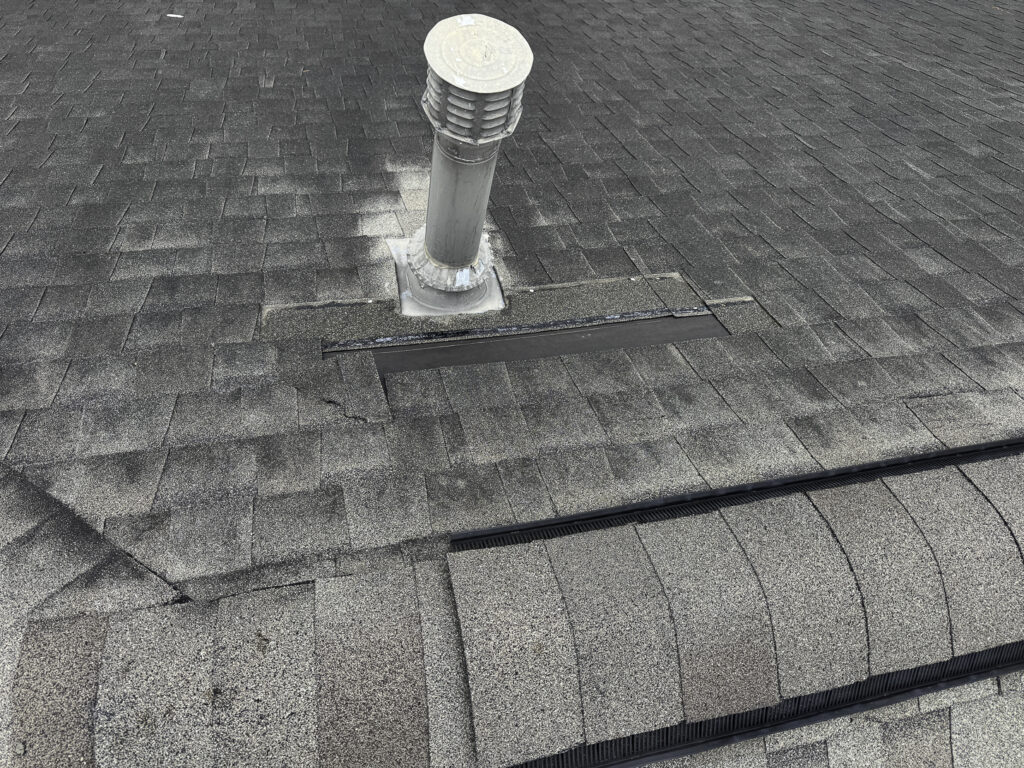
What Storm Damage Roof Repair Usually Involves
On a shingle roof, storm damage almost always comes from three things: wind, hail and the water that follows. Here’s what each one does.
- Wind breaks the factory seal strip under each shingle. Once the seal lets go, the tab can lift, crease and eventually tear off. Ridge caps, hip caps and the first courses at the eaves go first.
- Hail bruises the fiberglass mat and knocks granules loose. A bruise can look like a dark spot from the ground, or not show at all. Hail also dents soft metals: vents, flashing, gutters and downspouts.
- Water gets in through whatever wind and hail opened up. It soaks underlayment, then decking, then insulation and drywall.
A storm damage roof repair can be as small as resealing a few tabs and replacing a pipe boot, or as big as a full tear-off. The size depends on how far the damage spreads across each slope, how old the roof is and whether matching shingles are still made.
Many of these problems can’t be seen from the ground. That’s why we get on the roof and photograph each slope instead of guessing from the driveway.
Common Types of Storm Damage
Wind Damage
Straight-line winds and tropical systems are the usual cause here. What we look for:
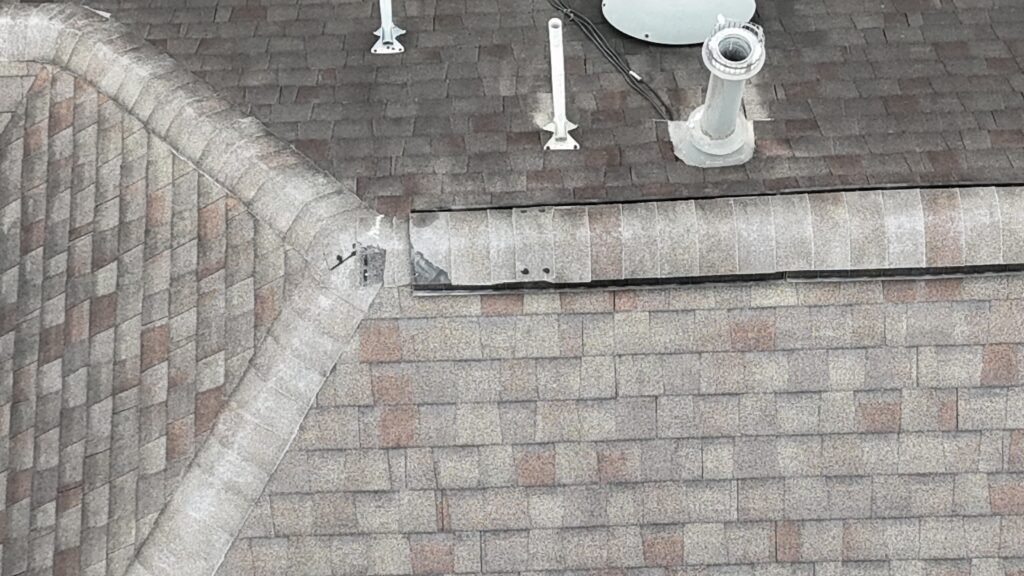
- Creased tabs, which show the shingle folded back and lost its grip
- Missing shingles, ridge caps or starter strip at the edges
- Lifted flashing at walls, chimneys and valleys
- Exposed nails where a tab blew off
Even a handful of missing shingles can let water into the decking. A creased shingle won’t seal again on its own, so it has to be replaced. Our guide on how to spot roof wind damage shows what each sign looks like, and our wind damage roof repair page covers the fix.
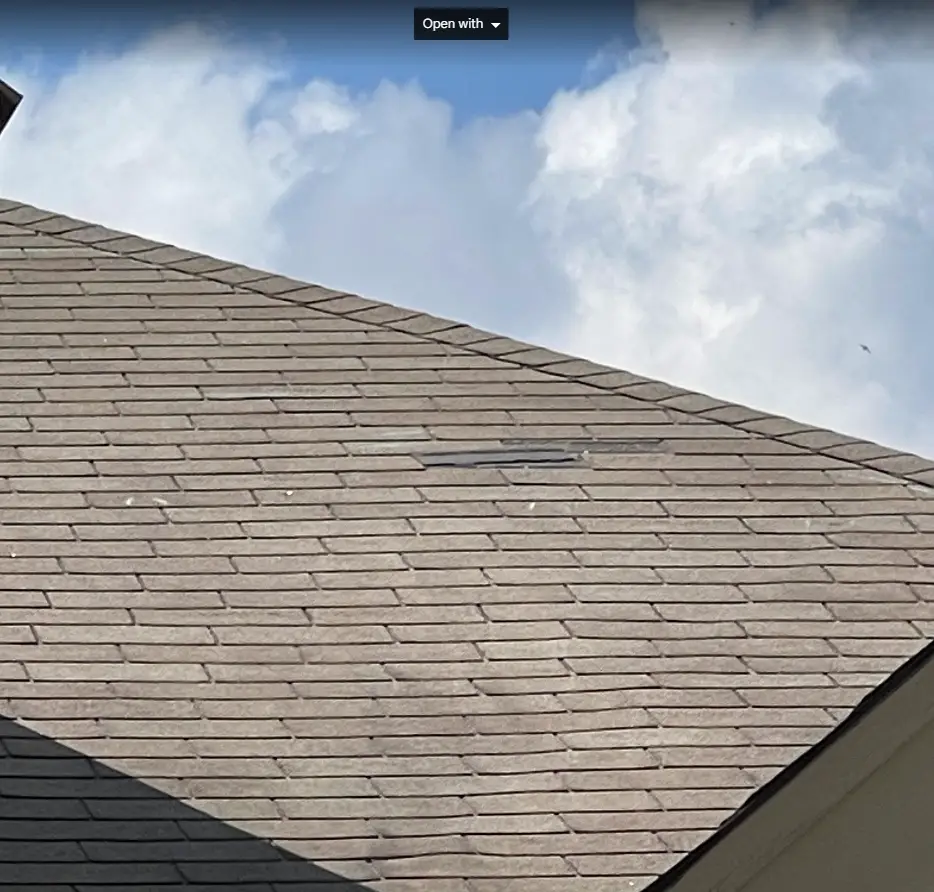
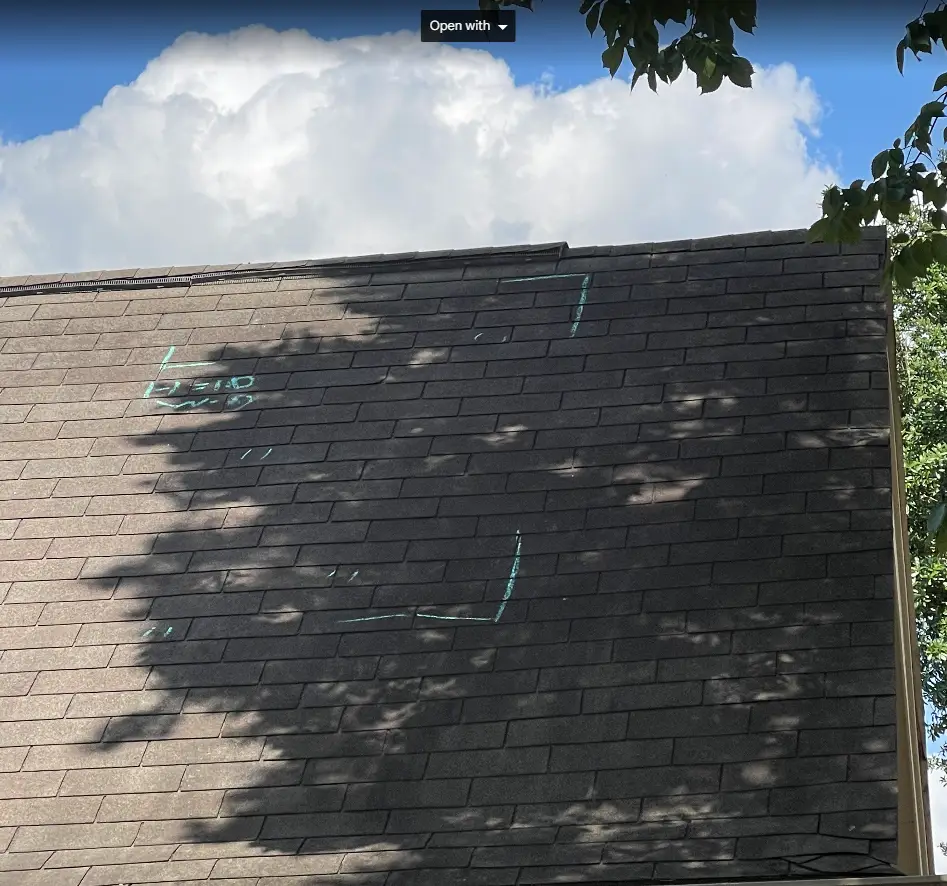
Hail Damage
Hail damage on asphalt shingles is mostly about the mat, not the surface. What we look for:
- Soft spots or bruises you can feel when you press on the shingle
- Granule loss in round spots, with the black asphalt showing
- Cracked or split shingles, especially on older roofs
- Dents in vents, flashing, gutters and downspouts
Dented gutters alone don’t mean the roof is damaged, but they tell us hail of some size hit the house. From there we check each slope. Read more about hail damage to your roof, or see our hail damage roof repair page.
If you’re not sure a storm hit your street, see the latest hail map to check reported impacts near you.
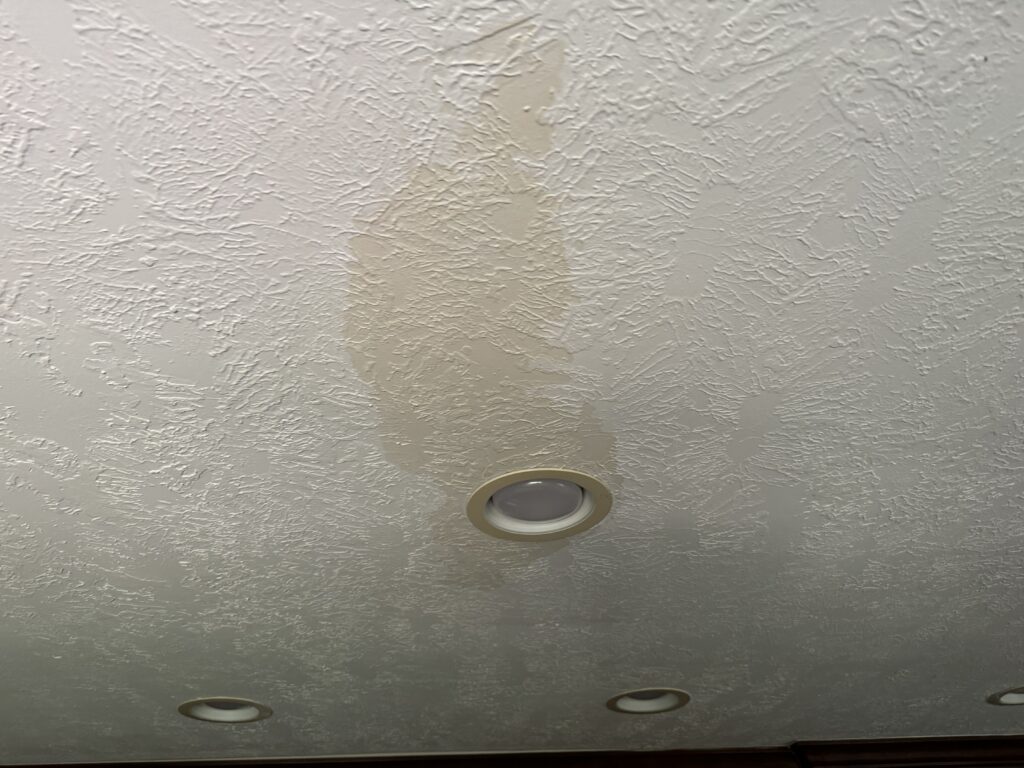
Water and Leak Damage After Storms
Water is what turns a shingle problem into a house problem. After a storm, watch for:
- New ceiling stains or bubbling paint
- A musty smell or damp insulation in the attic
- Dark, soft spots in the decking when you look up from the attic
- Drips around light fixtures, vents or the attic access
Leaks don’t always show up right away. Wind-driven rain can wet the underlayment and take a few more storms to reach the drywall. So check the attic after any big storm, even if the ceilings look fine. Our roof leak repair page covers how we trace a leak to its source.
Emergency Repairs: Tarps and Temporary Fixes
If water is coming in, stop it first and sort out the rest later. The Texas Department of Insurance tells homeowners to “Do what you need to keep the damage from getting worse, like covering it with a tarp or making temporary repairs.” It also says to “Keep receipts for all expenses.”
So tarp the roof, move belongings, put down buckets, and keep every receipt. Don’t climb a wet, steep roof yourself. A fall costs far more than a tarp service. Our emergency roof repair and tarping crew can dry the house in while you wait on the adjuster.
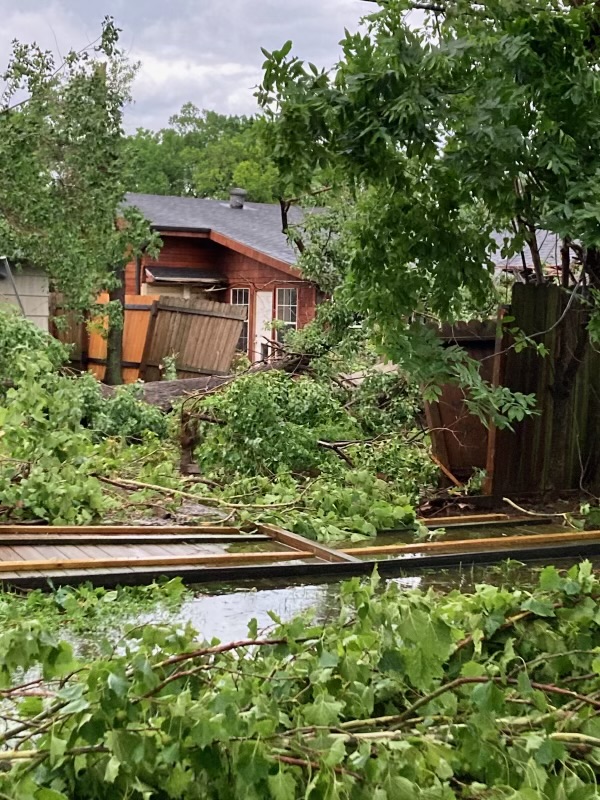
Signs Your Roof Needs Storm Damage Roof Repair
You can check a lot from the ground and the attic without climbing anything:
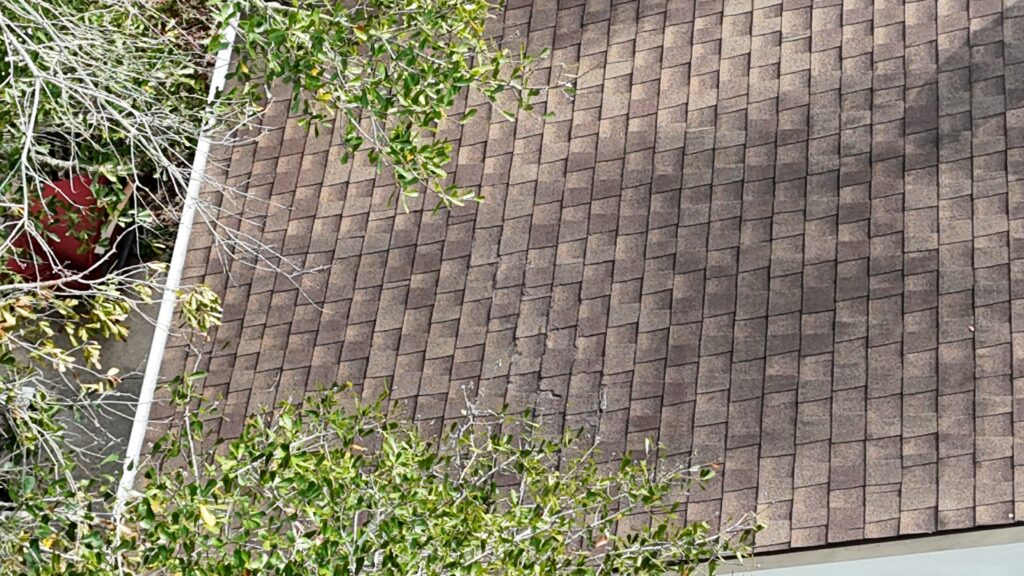
- Missing or creased shingles, or shingle pieces in the yard
- Heavy granules collecting in gutters or at the downspouts
- Dented flashing, gutters, window screens or roof vents
- Ceiling stains or wet insulation
- Tree limbs on the roof or debris marks on the shingles
None of these alone proves the roof needs replacing. They tell you it’s worth a closer look. Our list of roof damage signs goes deeper, and you can download our storm damage roof inspection checklist to walk the house yourself.
What to Do After a Storm Hits Your Home
In order, in the first few days:
- Stay safe. Watch for downed power lines and hanging limbs. Stay off the roof.
- Stop new water. Tarp or patch, and save the receipts.
- Document it. TDI’s advice is simple: “Take photos and videos of all damage.” Shoot every slope you can see, every ceiling stain, and any dented metal. Write down the storm date.
- Get an inspection. A roofer on the roof tells you whether there’s real damage before you decide on a claim.
- Decide whether to file. If the damage is real and the repair is well above your deductible, call your insurer. If it isn’t, a claim may cost you more than it pays.
That fourth and fifth step order matters. Our post on whether to call insurance or a roofer first explains why.
Storm Damage Insurance Claims in Texas
Most Texas homeowners policies cover sudden wind and hail damage, minus your deductible. What they don’t cover is an old, worn roof. TDI says it directly: “your insurance company won’t pay for a new roof just because it’s old or worn out.” That’s why the inspection photos matter. They separate storm damage from age.
The Texas claim timeline
Once you file, your insurer is on a clock. Per TDI’s claim guide:
- “Your company has 15 business days to say it got your claim.”
- It then has “15 business days after getting what it needs from you to tell you if it will pay your claim,” and “can extend this deadline by 45 days if they tell you why.”
- Once it agrees to pay, “it must pay within five business days.”
- “TDI can extend these deadlines by 15 more days if there is a weather-related catastrophe.”
What a roofer can and can’t do
Texas law draws clear lines. TDI’s roofing and insurance rules say a roofer can’t act as your public adjuster if they’re also doing the work, and “It’s also illegal in Texas for a contractor to offer to waive, rebate, or absorb a property policyholder’s deductible.” Any roofer who offers to “cover your deductible” is telling you something about how they do business.
We document damage, meet the adjuster on the roof when you want us there, and write an estimate for the repair. For the full walkthrough, read our roof insurance claims process guide. If your deductible is a percentage, our post on the wind and hail deductible shows how to figure it. If a claim already went sideways, see why Texas insurers deny roof claims, or our insurance claim assistance page.
Need to pin down the storm date for your claim? NOAA’s Storm Events Database “contains records on various types of severe weather, as collected by NOAA’s National Weather Service.”
Storm Damage Roof Repair: DIY vs Calling a Roofer
Fine to handle yourself
- Photos from the ground and the attic
- Clearing limbs and debris from the yard and gutters you can reach from a ladder
- Buckets, towels and moving belongings away from a leak
Call a roofer for
- Anything on the roof itself, especially wet or steep slopes
- Replacing creased or missing shingles, which has to be nailed and sealed to the manufacturer’s pattern to keep the warranty
- Flashing, pipe boots and valleys
- Anything tied to an insurance claim, where the adjuster will want to see the original damage
A bad DIY patch can also hide the damage an adjuster needs to see. If you’re weighing a few repairs against a new roof, our roof repair vs replacement guide walks through how we decide.
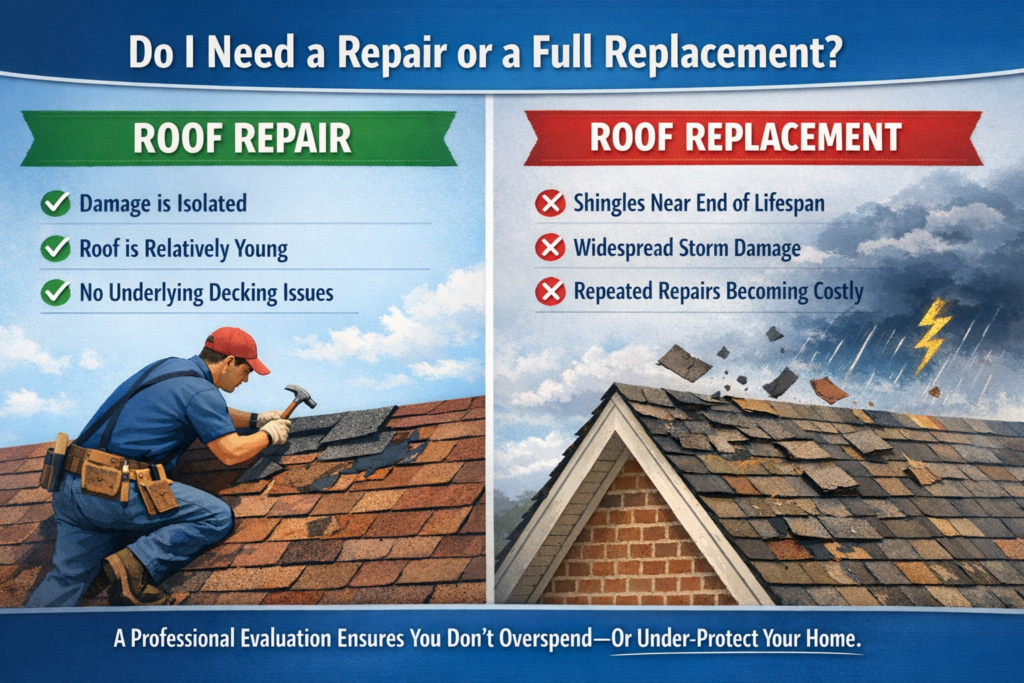
What Storm Damage Roof Repair Costs
The price of storm damage roof repair depends on how much of the roof is damaged, the shingle line, the pitch and whether decking has to be replaced. A small wind repair is usually a few hundred dollars. A full replacement on a typical Katy home runs into five figures.
If insurance pays, you still owe the deductible. On a policy with a percentage wind and hail deductible, that can be several thousand dollars. And if your policy pays actual cash value on the roof instead of replacement cost, the check can be well short of the bill. Our post on actual cash value vs replacement cost explains the difference.
For current replacement pricing, see our roof replacement cost guide.
How to Reduce Future Storm Damage
You can’t stop hail. You can make the roof harder to hurt:
- Impact-rated shingles at your next reroof. Class 4 shingles hold up better to hail, and some Texas insurers give a premium credit for them. They cost more, so it’s worth checking your carrier’s credit first. See our comparison of Class 3 vs Class 4 shingles.
- Better edges. Starter strip, drip edge and proper nailing at the eaves and rakes are where wind gets its first grip.
- Clean gutters so water doesn’t back up under the first course.
- Trim limbs that hang over the roof.
- Keep before photos. Photos of a healthy roof make the next claim easier to prove.
For hurricane season, our hurricane roof preparation checklist covers what to do before the next named storm. If you’re in Katy, our storm damage roofing in Katy page covers our local inspection process.
Storm Damage Roof Repair FAQs
How do I know if my roof has storm damage?
Look for missing or creased shingles, granules in the gutters, dented vents or gutters, and ceiling stains. A roofer on the roof with a camera is the only way to confirm it.
Is storm damage covered by insurance?
Most Texas homeowners policies cover sudden wind and hail damage, subject to your deductible and policy terms. Wear and age aren’t covered.
How soon should storm damage be repaired?
Stop active leaks right away. For the rest, get an inspection soon after the storm, while the damage is fresh and easy to tie to a date.
Can storm damage be hidden?
Yes. Broken seal strips and hail bruises often aren’t visible from the ground, and leaks can take weeks to show inside.
About the author — Brent Burgin is the owner and operator of All Out Roofing, a licensed local roofing contractor serving Katy, Houston, Cypress, Fulshear, and surrounding communities. Brent has lived in the Katy/Fulshear area since age 7 and is also a licensed Texas real estate agent (TREC #630213, with Terra Point Realty since 2013). Brent holds CertainTeed Master Craftsman and Shingle Quality Specialist credentials, and All Out Roofing also installs GAF and Owens Corning shingle systems. More about Brent.
Think a storm got your roof? Call All Out Roofing at (281) 769-4282 or schedule a free roof inspection. If there’s no damage, we’ll tell you.