
Energy-Efficient & Cool Roofing for Texas Homes

All Out Roofing, LLC

Energy-Efficient & Cool Roofing for Texas Homes

How Katy & Houston Homeowners Can Reduce Heat & Energy Costs

In Texas, your roof does more than protect your home—it directly impacts your energy bills, indoor comfort, and roof lifespan. With long summers, intense sun, and high attic temperatures, many homeowners in the Katy and Houston area unknowingly lose energy (and money) through an inefficient roofing system.

Energy-efficient and cool roofing systems are designed to combat heat buildup, reduce strain on HVAC systems, and improve overall home performance.

This guide explains how energy-efficient roofing works, what cool roofing really means, and how Texas homeowners can make smart upgrades that pay off long-term.
Why roofing energy efficiency matters in Katy Texas. All Out Roofing
Energy-Efficient & Cool Roofing | Katy & Houston TX, All Out Roofing

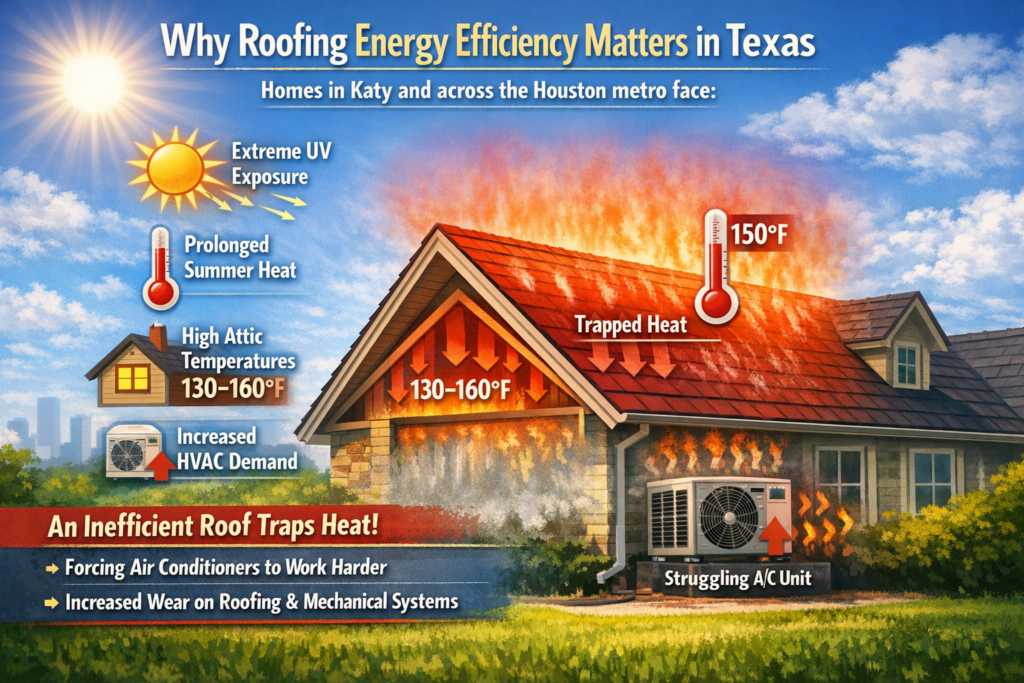
Why Roofing Energy Efficiency Matters in Texas

Homes in Katy and across the Houston metro face:

  • Extreme UV exposure

  • Prolonged summer heat

  • High attic temperatures (often 130–160°F)

  • Increased HVAC demand

An inefficient roof traps heat, forcing air conditioners to work harder and increasing wear on both roofing materials and mechanical systems.

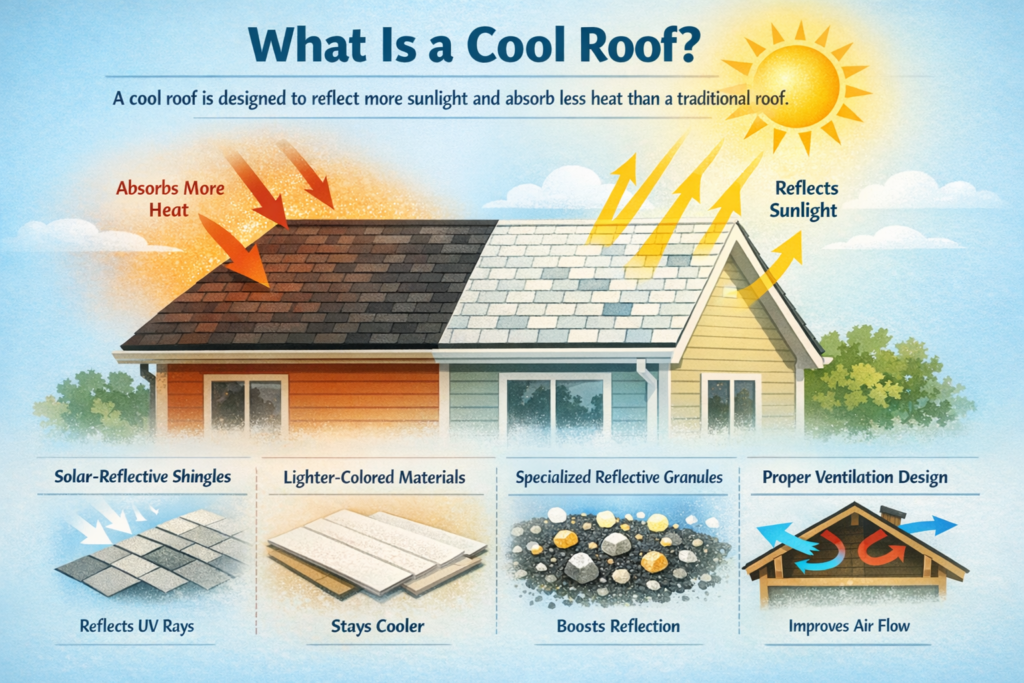
What Is a Cool Roof?

A cool roof is designed to reflect more sunlight and absorb less heat than a traditional roof.

Cool roofing is achieved through:

  • Solar-reflective shingles

  • Lighter-colored roofing materials

  • Specialized reflective granules

  • Proper ventilation design

Contrary to popular belief, cool roofs are not limited to white or flat roofs—many architectural shingles approved for Texas homes qualify as cool roofing products.

Everything You Need to Know About Roofing — All Under One Roof

How Cool Roofing Reduces Attic Temperatures

Traditional roofs absorb solar radiation, transferring heat directly into the attic.

Cool roofing works by:

  • Reflecting solar energy away from the roof surface

  • Reducing heat transfer through decking

  • Lowering attic air temperature

  • Decreasing HVAC runtime

In many Texas homes, cool roofing can reduce attic temperatures by 20–30 degrees, especially when paired with proper ventilation.

Energy-Efficient Roofing Materials for Texas Homes

1. Solar-Reflective Asphalt Shingles

Pros:

  • HOA-friendly

  • Affordable upgrade

  • Lower heat absorption

  • Available in darker colors

Cons:

  • Slightly higher cost than standard shingles

These are the most common energy-efficient option for Katy-area neighborhoods.

2. Impact-Resistant Cool Shingles

These combine hail resistance with reflective technology.

Pros:

  • Storm durability

  • Energy efficiency

  • Potential insurance benefits

Storm & Hail Roof Damage Guide

3. Metal Roofing Systems

Metal roofs naturally reflect solar radiation and cool quickly after sunset.

Pros:

  • Excellent heat reflection

  • Long lifespan

  • High wind resistance

Cons:

  • Higher upfront investment

Metal roofing performs exceptionally well in hot Texas climates when properly ventilated.

Ventilation: The Missing Half of Energy Efficiency

Cool roofing alone isn’t enough—ventilation is critical.

Without ventilation:

  • Heat builds up beneath reflective shingles

  • Moisture becomes trapped

  • Shingle lifespan shortens

  • Warranties may be compromised

Effective ventilation includes:

  • Balanced intake (soffits)

  • Exhaust vents (ridge, box, or turbines)

  • Proper attic airflow design

Why Roof Ventilation Matters in Texas Homes

How Energy-Efficient Roofing Lowers Energy Bills

Energy-efficient roofing helps by:

  • Reducing attic heat transfer

  • Lowering indoor temperatures

  • Decreasing HVAC runtime

  • Reducing peak energy demand

While savings vary, many Texas homeowners notice measurable reductions in cooling costs, especially during prolonged heat waves.

Common Myths About Cool Roofing

“Cool roofs only work on flat roofs”

False. Many steep-slope residential roofs qualify.

“Darker shingles can’t be energy-efficient”

False. Reflective granules allow darker shingles to perform efficiently.

“Ventilation doesn’t affect energy efficiency”

False. Ventilation is essential to performance.

Energy Efficiency, Roof Lifespan & Warranties

Lower attic temperatures help:

  • Prevent shingle overheating

  • Reduce thermal cycling

  • Extend material lifespan

  • Protect manufacturer warranties

Many warranty issues stem from heat-related deterioration, not material defects.

Roof Warranties Explained for Texas Homeowners

When Energy-Efficient Roofing Makes the Most Sense

Energy-efficient upgrades are especially valuable when:

  • Replacing an aging roof

  • Experiencing high energy bills

  • Dealing with poor attic ventilation

  • Planning long-term home ownership

Roof Repair vs Roof Replacement: How to Know Which You Need

Energy-Efficient Roofing FAQs

Do cool roofs really work in Texas?

Yes. Cool roofs are specifically beneficial in hot climates like Katy and Houston.

They can reduce cooling demand, especially when combined with proper ventilation.

Yes. Ventilation is essential to maximize performance and protect warranties.

Many cool shingles are HOA-compliant and visually indistinguishable from standard shingles.

Scroll to Top