
Best Roofing Materials for Texas Homes

Pros, Cons & Cost Comparison for Katy & Houston

Choosing the right roofing material is one of the most important decisions Texas homeowners make. Heat, hail, humidity, and wind all play a role in how long a roof lasts—and how well it performs.

For homeowners in Katy and the Houston area, the best roofing material balances durability, energy efficiency, cost, and storm resistance.

This guide compares the most common roofing materials used in Texas homes so you can make a confident, informed choice.
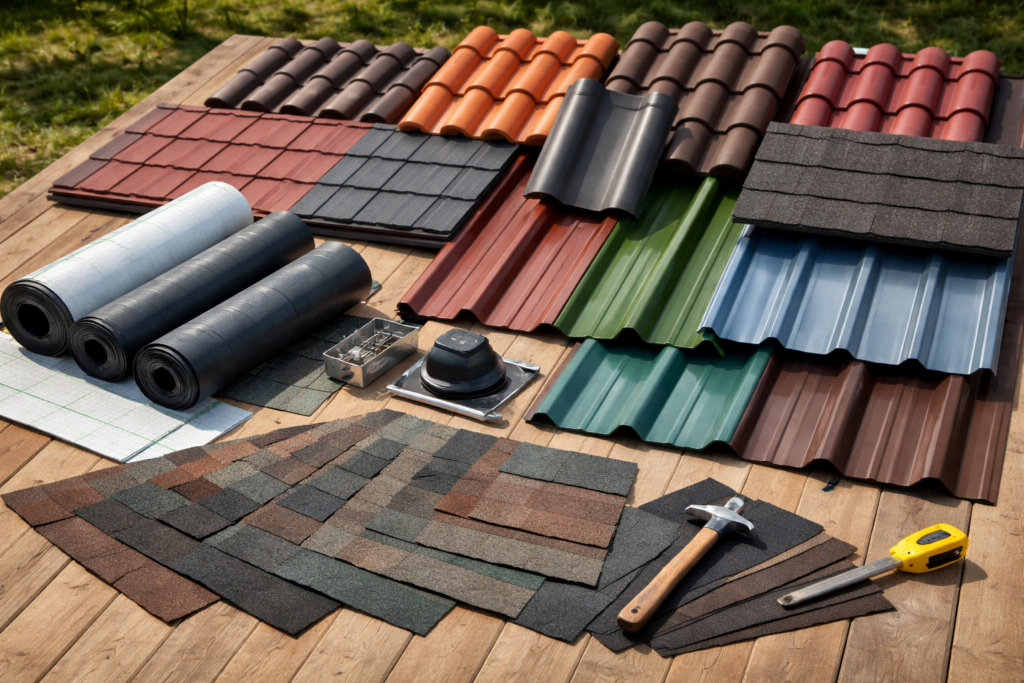
Sample of roofing material used by All Out Roofing Best Roofing Materials for Texas Homes

Why Roofing Material Choice Matters in Texas

Texas roofs face:

  • Extreme UV exposure

  • Frequent hailstorms

  • High wind events

  • Heavy rainfall

Material choice directly affects:

  • Roof lifespan

  • Insurance performance

  • Energy bills

  • Repair frequency

Everything You Need to Know About Roofing — All Under One Roof

Architectural Asphalt Shingles (Most Common)

Pros:

  • Affordable

  • Wide style options

  • Good wind ratings

  • Easier repairs

Cons:

  • Shorter lifespan in Texas heat

  • Hail damage susceptibility

Best for homeowners seeking value and versatility.

Impact-Resistant Shingles (Hail-Rated)

Pros:

  • Better hail performance

  • Potential insurance discounts

  • Longer lifespan

Cons:

  • Higher upfront cost

Excellent option for hail-prone Katy & Houston neighborhoods.

Storm & Hail Roof Damage Guide

Metal Roofing Systems

Pros:

  • 40–50 year lifespan

  • Excellent heat reflection

  • High wind resistance

Cons:

  • Higher installation cost

  • More complex repairs

Best for homeowners prioritizing longevity and efficiency.

Energy-Efficient / Cool Roof Shingles

Pros:

  • Reduced attic temperatures

  • Lower cooling costs

  • HOA-friendly options

Cons:

  • Slightly higher material cost

Ideal for reducing Texas summer heat impact.

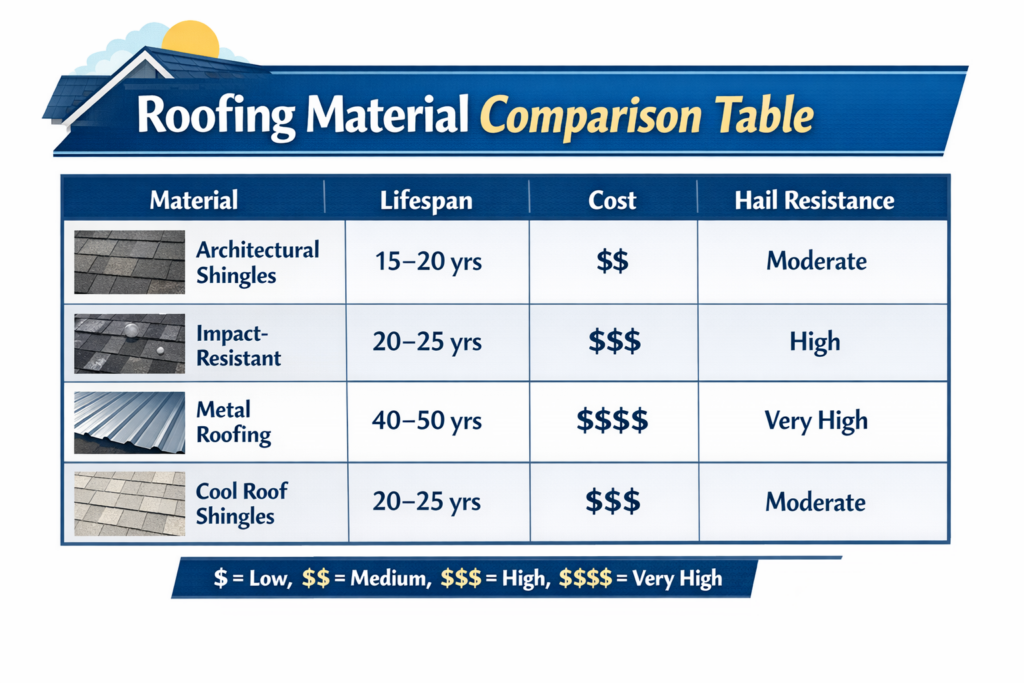
Material Comparison Table

MaterialLifespanCostHail Resistance
Architectural Shingles15–20 yrs$$Moderate
Impact-Resistant20–25 yrs$$$High
Metal Roofing40–50 yrs$$$$Very High
Cool Roof Shingles20–25 yrs$$$Moderate

HOA & Neighborhood Considerations

Many Katy communities restrict:

  • Colors

  • Profiles

  • Reflectivity

Always verify HOA guidelines before selecting materials.

Roofing Materials FAQs

What is the best roofing material for Texas heat?

Cool roof shingles and metal roofing perform best in extreme heat.

Yes—especially in hail-prone areas and for insurance savings.

No, when installed properly with decking and insulation.

Cool roof shingles and metal roofing perform best in extreme heat.

Yes—especially in hail-prone areas and for insurance savings.

No, when installed properly with decking and insulation.

Related Reading

Sample of roofing material used by All Out Roofing
Best Roofing Materials for Texas Homes

Why Roofing Material Choice Matters in Texas

Texas roofs face:

  • Extreme UV exposure

  • Frequent hailstorms

  • High wind events

  • Heavy rainfall

Material choice directly affects:

  • Roof lifespan

  • Insurance performance

  • Energy bills

  • Repair frequency

Everything You Need to Know About Roofing — All Under One Roof

Architectural Asphalt Shingles (Most Common)

Pros:

  • Affordable

  • Wide style options

  • Good wind ratings

  • Easier repairs

Cons:

  • Shorter lifespan in Texas heat

  • Hail damage susceptibility

Best for homeowners seeking value and versatility.

Impact-Resistant Shingles (Hail-Rated)

Pros:

  • Better hail performance

  • Potential insurance discounts

  • Longer lifespan

Cons:

  • Higher upfront cost

Excellent option for hail-prone Katy & Houston neighborhoods.

Storm & Hail Roof Damage Guide

Metal Roofing Systems

Pros:

  • 40–50 year lifespan

  • Excellent heat reflection

  • High wind resistance

Cons:

  • Higher installation cost

  • More complex repairs

Best for homeowners prioritizing longevity and efficiency.

Energy-Efficient / Cool Roof Shingles

Pros:

  • Reduced attic temperatures

  • Lower cooling costs

  • HOA-friendly options

Cons:

  • Slightly higher material cost

Ideal for reducing Texas summer heat impact.

Material Comparison Table

MaterialLifespanCostHail Resistance
Architectural Shingles15–20 yrs$$Moderate
Impact-Resistant20–25 yrs$$$High
Metal Roofing40–50 yrs$$$$Very High
Cool Roof Shingles20–25 yrs$$$Moderate

HOA & Neighborhood Considerations

Many Katy communities restrict:

  • Colors

  • Profiles

  • Reflectivity

Always verify HOA guidelines before selecting materials.

Roofing Materials FAQs

What is the best roofing material for Texas heat?

Cool roof shingles and metal roofing perform best in extreme heat.

Yes—especially in hail-prone areas and for insurance savings.

No, when installed properly with decking and insulation.

Metal Roofing vs. Asphalt Shingles: A Deeper Comparison for Texas Homeowners

The comparison table above covers the basics, but metal roofing and asphalt shingles are the two options homeowners weigh most often when planning a replacement. Here's a closer look at how they stack up on the factors that matter most in Katy and Houston.

Upfront Cost

Architectural asphalt shingles typically run $350–$550 per square installed, while standing seam metal roofing runs $800–$1,400 per square installed. Metal costs roughly 2–3x more upfront, which is the biggest factor that steers most homeowners toward shingles for a straightforward replacement.

Lifespan & Long-Term Value

Asphalt shingles last 15–20 years in Texas conditions; metal roofing lasts 40–50 years with minimal degradation. Over a 40-year horizon, most homeowners will replace an asphalt roof twice, which narrows the total cost-of-ownership gap between the two materials considerably.

Storm & Hail Performance

Standing seam metal handles wind exceptionally well and won't crack or curl, but can dent from large hail. Impact-resistant (Class 4) asphalt shingles are specifically engineered to resist hail cracking and often qualify for an insurance premium discount — something standard metal panels don't always carry the same discount for, depending on your carrier.

Maintenance & Repairs

Asphalt shingle repairs are simple and inexpensive — a contractor can usually match and replace a section in an afternoon. Metal roof repairs require specialized tools and installers, and matching panel color/profile years later can be harder.

Energy Efficiency & Noise

Metal roofing reflects more solar heat, which can meaningfully lower attic temperatures and cooling costs in Texas summers. Properly installed metal roofing (with solid decking and insulation) is not noticeably louder in rain than shingles — a common myth.

Which Should You Choose?

Asphalt shingles make sense if you want the lowest upfront cost, simpler repairs, and a wide range of style/color options. Metal roofing makes sense if you plan to stay in your home long-term, want to minimize future replacements, and value maximum wind and heat performance. Either way, a free inspection and written estimate will tell you which option fits your roof, budget, and timeline.

Do metal roofs cost more to insure than shingle roofs?
Not necessarily. Many insurers offer discounts for metal roofing's wind and fire resistance, similar to the discounts available for Class 4 impact-resistant shingles — ask your agent to compare both options.

Can you install metal roofing over existing asphalt shingles?
In many cases yes, which can reduce tear-off costs, though a full inspection is needed first to confirm the decking can support it.

Scroll to Top