Roofing Warranties Explained
What Katy & Houston Homeowners Need to Know (Deep Dive)
Roofing warranties are often misunderstood—and that confusion can cost homeowners thousands. Many people assume a “lifetime warranty” means their roof is fully covered no matter what. In reality, roofing warranties are layered, conditional, and dependent on proper installation and maintenance.
For homeowners in Katy and throughout the Houston area, understanding how roofing warranties work is essential to protecting your investment—especially in a storm-prone, high-heat climate.
This deep-dive explains manufacturer warranties, workmanship warranties, what voids coverage, and how to actually keep your roof protected.
Why Roofing Warranties Matter More in Texas
Texas roofs endure:
Extreme heat and UV exposure
High winds and hail
Heavy rain and humidity
These conditions accelerate wear, which means warranty eligibility matters. If a roof fails early, warranty coverage can be the difference between a covered claim and an out-of-pocket replacement.
Everything You Need to Know About Roofing — All Under One Roof
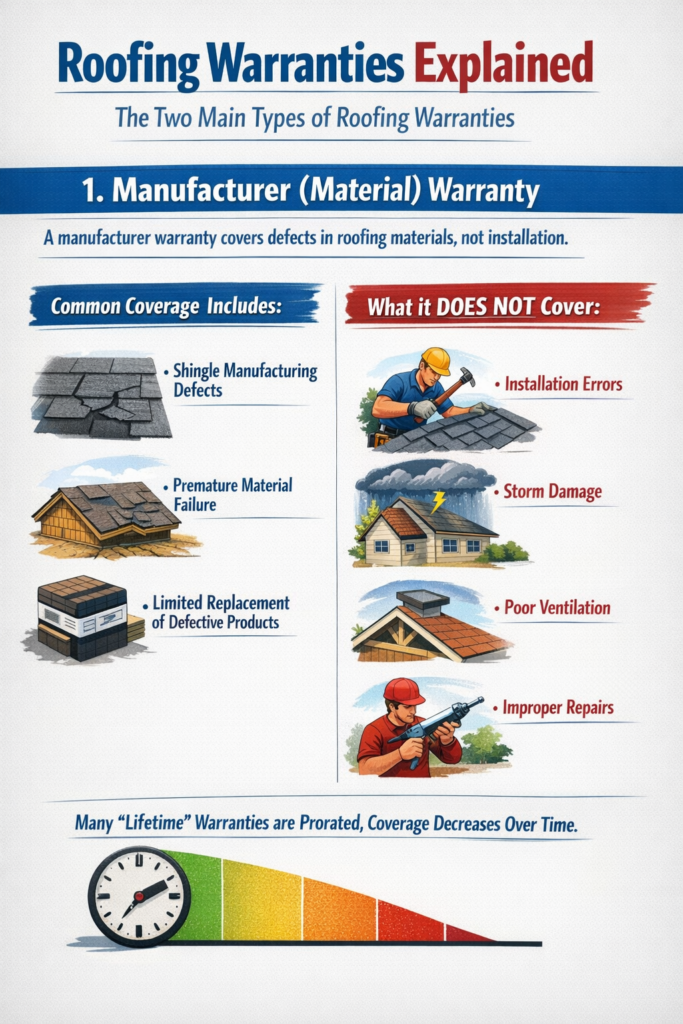
The Two Main Types of Roofing Warranties
Every residential roof typically includes two different warranties—and they cover very different things.
1. Manufacturer (Material) Warranty
A manufacturer warranty covers defects in roofing materials, not installation.
Common coverage includes:
Shingle manufacturing defects
Premature material failure
Limited replacement of defective products
What it does NOT cover:
Installation errors
Storm damage
Poor ventilation
Improper repairs
Many “lifetime” warranties are prorated, meaning coverage decreases over time.
2. Workmanship (Labor) Warranty
A workmanship warranty is provided by the roofing contractor and covers installation-related issues.
Typically covers:
Installation errors
Flashing failures
Leaks caused by workmanship
Does not cover:
Material defects
Storm damage
Normal wear and tear
This warranty is only as good as the contractor standing behind it.
Extended & Enhanced Manufacturer Warranties
Some manufacturers offer enhanced warranties when:
Certified contractors install the roof
Approved materials are used
Installation follows strict guidelines
These enhanced warranties may include:
Longer non-prorated periods
Limited labor coverage
Stronger wind warranties
However, one missed requirement can void the upgrade.
What Commonly Voids a Roofing Warranty
This is where most homeowners get caught off guard.
The most common warranty-voiding issues:
Improper ventilation
Skipped underlayment
Incorrect flashing methods
Unapproved repairs
Lack of maintenance documentation
In Texas, ventilation issues alone are one of the top causes of denied warranty claims.
Why Roof Ventilation Matters in Texas Homes
Ventilation & Warranty Compliance (Critical Section)
Manufacturers require proper ventilation to:
Prevent heat buildup
Reduce shingle deterioration
Avoid trapped moisture
Without balanced intake and exhaust ventilation:
Shingles overheat
Decking deteriorates
Warranties may be denied
This is especially important in hot, humid climates like Katy and Houston.
Roofing Warranties vs Storm Damage
Storm damage is not a warranty issue—it’s an insurance issue.
Key distinction:
Warranties cover defects and installation
Insurance covers sudden damage (hail, wind, fallen debris)
Trying to use a warranty for storm damage almost always fails.
Repairs, Modifications & Warranty Risk
Even a properly installed roof can lose coverage if repairs are handled incorrectly.
Warranty risks include:
Unqualified repair work
Improper sealants or materials
Added penetrations without flashing updates
Always document repairs and use qualified professionals.
Documentation: Your Warranty Safety Net
To protect your warranty, homeowners should keep:
Installation contracts
Material invoices
Inspection reports
Repair documentation
Photos of completed work
Without documentation, warranty claims become difficult—if not impossible.
Transferability & Home Resale
Some warranties are transferable, others are not.
Transfer considerations:
Transfer window (often 30–60 days)
Inspection requirements
Registration paperwork
Transferable warranties can add real resale value.
Manufacturer vs Contractor: Who Do You Call?
Material defect? → Manufacturer
Installation issue? → Contractor
Storm damage? → Insurance
Knowing who to call prevents delays and finger-pointing.
Roofing Warranty FAQs
What does a roofing warranty actually cover?
Most warranties cover manufacturing defects, not installation errors or storm damage.
Can poor ventilation void a roof warranty?
Yes. Improper ventilation is one of the most common causes of denied claims.
Are roofing warranties transferable to new homeowners?
Some are, but transfer deadlines and inspections often apply.
Does hail damage fall under a roofing warranty?
No. Hail damage is typically handled through insurance, not warranties.
Do repairs affect roofing warranties?
Yes. Improper or undocumented repairs can void coverage.