Roof leak repair is usually a small, specific job once you know where the water is actually getting in. The hard part isn’t the fix. It’s finding the right spot, and then choosing a repair that matches the cause instead of smearing sealant over the symptom.
This post covers what a proper roof leak repair looks like on a Katy roof, source by source, what it tends to involve, and when a repair stops making sense. If water is coming through your ceiling right now, start with our guide to emergency roof leak repair for the first hour, then come back here.
Roof Leak Repair Starts With the Real Source
Water rarely drips straight down from the hole. It lands on the decking, runs along a rafter or the back of the underlayment, and shows up on the ceiling several feet away. So a stain over the dining room can start at a pipe boot above the hall bath.
That’s why a good roof leak repair begins in the attic. We look for wet decking, dark stains on the wood, rusty nail tips and daylight around penetrations, then trace the path uphill to where the water first got through. Only then do we go on the roof and look at that spot. Our post on roof leak detection walks through the five places Katy leaks start most often.
If a roofer quotes a repair without going in the attic or checking the spot on the roof, ask how they know where the leak is.
What Roof Leak Repair Looks Like at Each Source
Different leaks need different fixes. Here is how we handle the common ones:
- Pipe boots. The rubber collar around a plumbing vent cracks in the sun. The right fix is a new boot slid under the upslope shingles, not caulk around the old one.
- Wall and chimney flashing. Where a roof meets a wall, step flashing should be woven in with each shingle course, with a kick-out at the bottom. If it was skipped or has rusted, the repair means lifting shingles and replacing the metal.
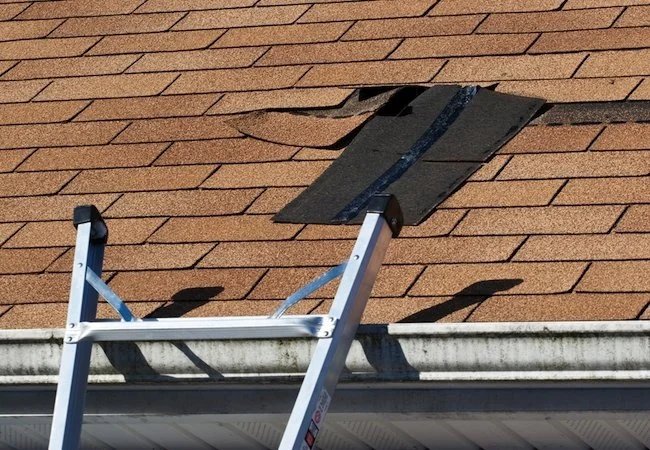
- Missing or damaged shingles. Replacing a few shingles is routine, but they need to match in style and be sealed in. On an older roof, nearby shingles can crack when they’re lifted, so the repair area sometimes grows.
- Valleys. Valleys carry the most water on the roof. A shingle cut short or a nail too close to the center line leaks here first. The fix is often re-laying that section of the valley.
- Exposed or popped nails. A nail that backs out lifts the shingle above it and lets water run down the shank. The repair is pulling it, refastening nearby, and replacing the damaged shingle if needed.
- Ridge cap and vents. Wind lifts loose ridge cap and box vents. These get refastened or replaced and sealed.
Notice that sealant shows up as a finishing step, not the repair itself. Caulk on top of a failed part buys a few months at best.
What You Can Safely Do Before the Roof Leak Repair
Stay off a wet roof. Shingles are slick when damp, and a fall costs far more than any leak. The useful work you can do is inside the house:
- Move furniture and electronics, and catch the water in a bucket or tote.
- If a ceiling is bulging with water, a small hole at the low point lets it drain into the bucket instead of bringing the drywall down.
- Take photos of the ceiling, the attic and any wet insulation, with dates.
- Note when it leaks. Only in wind-driven rain from one direction? Only after long storms? That tells the roofer a lot.
Then get it looked at soon. A slow leak can soak insulation and decking for weeks before it shows on a ceiling.
When Roof Leak Repair Isn't Enough
A repair is the right call for isolated damage on a roof that still has life in it. It stops being the right call when:
- The roof is losing granules on every slope, and shingles crack when they’re lifted.
- The same area leaks again after a proper repair.
- There are several leak points in different places at once.
- The decking under the leak is soft or delaminated over a wide area.
At that point you’re paying for repairs on a roof that is wearing out as a whole. Our roof repair vs replacement guide covers where that line usually falls.
Be realistic about insurance too. If the leak comes from age, not a storm, the policy usually won’t help. The Texas Department of Insurance puts it plainly in its guide to replacing your roof: “Your insurance company won’t pay for a new roof just because it’s old or worn out.” TDI also suggests you “Hire a roof inspector every few years to find issues early.” If the leak started after hail or wind, read our post on whether to call insurance or a roofer first before you file.
And watch who you hire. TDI’s page on contractor scams advises homeowners to “hire local contractors, get written bids, and check references,” and to “Be wary if a contractor asks for a large or full down payment.” That applies to a small roof leak repair just as much as to a full roof.
Get Your Roof Leak Repair Done Right
Most roof leak repair jobs are small when you catch them early and expensive when you don’t. A cracked pipe boot is a quick fix this month. Left alone, it can mean wet insulation, stained drywall and soft decking by next spring.
If you’re in Katy, Fulshear, Cypress or west Houston and want someone to find the actual source, call All Out Roofing at (281) 769-4282. We’ll check the attic and the roof, show you photos of what we find, and tell you plainly whether a repair will hold or whether the roof is telling you something bigger.
Email: info@alloutroofs.com
About the author
About the author — Brent Burgin is the owner and operator of All Out Roofing, a licensed local roofing contractor serving Katy, Houston, Cypress, Fulshear, and surrounding communities. Brent has lived in the Katy/Fulshear area since age 7 and is also a licensed Texas real estate agent (TREC #630213, with Terra Point Realty since 2013) — a cross-domain background that helps homeowners think through roof decisions in the context of their home’s overall value and any pending real estate transactions. Brent holds CertainTeed Master Craftsman and Shingle Quality Specialist credentials, and All Out Roofing installs CertainTeed, GAF and Owens Corning shingle systems.
All Out Roofing, LLC — 25220 Kingsland Blvd, Ste 100, Katy, TX 77494. Available 24/7 for storm response.