
The roof insurance claims process in Texas is not complicated, but it is unforgiving about order. Do the steps in the wrong sequence and you can end up with a claim on your record for damage that never met your deductible, or a payout that left out half the roof.
I have walked a lot of Katy homeowners through this after hail and wind. What follows is the sequence I would follow on my own house: inspect first, protect and document, report, meet the adjuster, read the estimate, and only then sign anything for the repair. Along the way I will point to what the Texas Department of Insurance actually requires of your insurance company, so you know which deadlines are law and which are just habit.
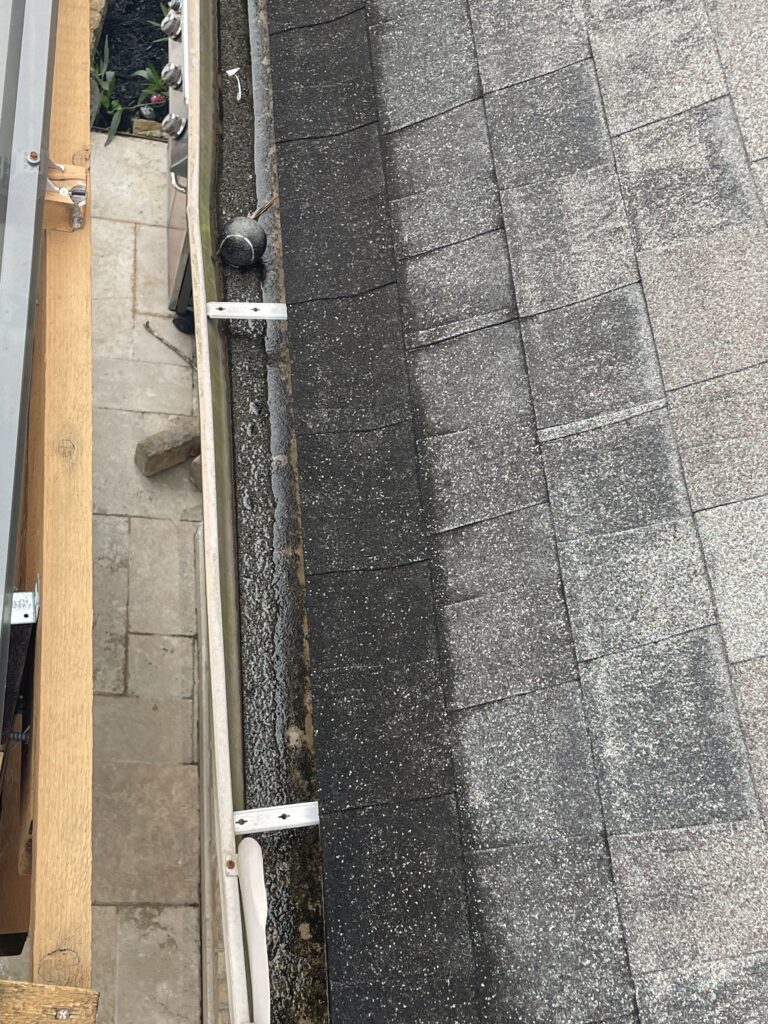
Step 1: Decide Whether the Roof Insurance Claims Process Is Worth Starting
The first decision is not how to file. It is whether to file. A claim that pays nothing still gets recorded, and many Texas homeowners carry a separate wind and hail deductible that is a percentage of dwelling coverage. On a $400,000 dwelling limit, a 2% deductible is $8,000 before the carrier pays a dollar. If the damage is a few lifted shingles and a dented vent, that math rarely works.
So get the roof looked at before the roof insurance claims process ever starts. A storm damage roof inspection tells you whether you are looking at a small repair or a full replacement. Our post on how the wind and hail deductible is figured shows how to find your number on the declarations page.
The one exception: if water is coming into the house, call your insurance company right away and get the roof dried in. We cover that judgment call in whether to call insurance or a roofer first.
Step 2: Protect the House and Document Everything
Early in the roof insurance claims process, your policy expects you to keep a loss from getting worse. TDI puts it plainly in its guide to getting your insurance claim paid: “Do what you need to keep the damage from getting worse, like covering it with a tarp or making temporary repairs.” The same page says to “Keep receipts for all expenses.” A tarp invoice is part of the claim, not a cost you eat.
Then build the file before anyone from the insurance company shows up:
- Photos and video of the roof from the ground, every slope, plus close-ups of anything loose or missing.
- Collateral damage: dented gutters, downspouts, AC fins, window screens, fence caps. Adjusters use these to confirm hail size and direction.
- Inside damage: ceiling stains, wet insulation, the attic deck around any leak.
- The date and time of the storm, and the date you first noticed damage.
TDI’s own advice is short: “Take photos and videos of all damage.” Do not climb a wet roof to get them. If a leak needs a crew today, our emergency roof tarping team can dry it in and photograph the damage before the tarp goes on.
Step 3: Report the Claim and Know the Texas Deadlines
Once you file, the roof insurance claims process runs on deadlines set by state law. Write down your claim number, the date you reported it, and the name, phone and email of every person you talk to.
Here is what TDI says the company owes you:
- “Your company has 15 business days to say it got your claim. The company must also start its review and ask you for any information it needs.”
- “Your company has 15 business days after getting what it needs from you to tell you if it will pay your claim.”
- “The company can extend this deadline by 45 days if they tell you why they need more time.”
- “After your insurance company agrees to pay all or part of your claim, it must pay within five business days.”
After a big hail event those clocks can stretch. TDI notes it “can extend these deadlines by 15 more days if there is a weather-related catastrophe.” Its post on Texas claim deadlines covers the same rules. If a deadline passes with no word, a polite written follow-up that cites the date usually moves things.
Step 4: Meet the Adjuster on the Roof
The adjuster decides what the first estimate says, so this visit matters more than any other step in the roof insurance claims process. TDI’s advice is to “Be available for the adjuster so you can point out the damage.” Be there, have your photos on your phone, and walk the collateral damage with them.
On a hail claim, the adjuster will usually mark test squares on each slope and count bruises inside them. Each carrier sets its own threshold for what counts as enough. Wind claims look different: creased shingles, broken seal strips, missing tabs along the rakes and ridge.
You can have your roofer at the inspection, and I usually recommend it, because a roofer can point at a soft spot in the decking or a cracked pipe boot the adjuster walked past. But Texas draws a hard line on what that roofer can do. TDI’s page on roofing and insurance law says Texas “doesn’t allow a roofer or contractor to act as a public insurance adjuster on insurance claims if they’re also doing the work.” A roofer who offers to negotiate your settlement, or who says they speak for you on coverage, is breaking that rule. We show the damage. You and your carrier settle the claim.
Step 5: Read the Estimate Line by Line
The estimate is where most money gets lost in the roof insurance claims process, usually through omissions rather than bad faith. Before you agree to anything, check it against what is actually on your roof:
- Measurements. Squares, pitch, waste factor, number of stories. A steep two-story roof costs more to replace than a flat-looking ranch with the same footprint.
- The whole system. Underlayment, drip edge, starter, ridge cap, pipe boots, step and counter flashing, and ridge or turtle vents. Missing components are the most common short-pay I see.
- Decking. Rotten or delaminated decking is usually found only at tear-off. Ask how the carrier handles a supplement for it.
- Code items. If current code requires something your old roof did not have, that cost may fall under ordinance or law coverage. Check whether your policy has it.
Then look at how you are being paid. Under a replacement cost policy, carriers often hold back depreciation until the work is done. Under actual cash value, that depreciation is gone for good. Our post on actual cash value vs replacement cost walks through what that looks like on an older roof.
Your deductible comes out of the payout, and it stays yours to pay. TDI says it is “illegal in Texas for a contractor to offer to waive, rebate, or absorb a property policyholder’s deductible,” and that contracts “for $1,000 or more that involve an insurance settlement” must include a notice that you owe it. More on that in can a roofer waive my deductible.
When the Roof Insurance Claims Process Goes Sideways
Sometimes the estimate is low, or the answer is no. Neither ends the roof insurance claims process.
If the claim is denied, read the letter closely. TDI says “If the company rejects your claim, it must say why in writing.” Common reasons are wear and tear, damage the carrier dates to an older storm, or a late report. Our post on why Texas insurers deny hail and wind roof claims covers each one and what evidence answers it.
If the amount is the problem, start simple. TDI’s advice is to “Call your insurance company or agent if you disagree with the amount of the claim payment.” Send a written request for a reinspection with your photos and your roofer’s itemized estimate. A lot of short-pays get fixed at this stage.
If that stalls, many Texas homeowner policies include an appraisal clause for disputes over value, and some homeowners hire a licensed public adjuster. Both cost money and time, and neither fits every claim. We wrote about when a public adjuster in Texas makes sense, including when to skip one.
One honest note: if your roof was already near the end of its life, the insurance process may not be your path to a new one. Carriers pay for sudden storm damage, not age. In that case, a straight retail replacement, priced openly, can be simpler than a long fight.
Where We Fit in Your Claim
Our part of the roof insurance claims process is narrow, and I like it that way. We inspect the roof and tell you straight whether a claim makes sense. We document what we find with photos. We can meet the adjuster to point out damage. And once the claim is settled, we build the roof the estimate pays for, with the components the manufacturer’s system calls for. We do not negotiate your settlement, and we do not touch your deductible.
If the storm missed you this time, the cheapest claim is the one you never need. A little seasonal roof maintenance keeps small problems from looking like old damage the next time an adjuster climbs up.
If you want a second set of eyes before you call your carrier, call All Out Roofing at (281) 769-4282. We will tell you what we see, including when the answer is that you should not file.
About the author — Brent Burgin is the owner and operator of All Out Roofing, a licensed local roofing contractor serving Katy, Houston, Cypress, Fulshear, and surrounding communities. Brent has lived in the Katy/Fulshear area since age 7 and is also a licensed Texas real estate agent (TREC #630213, with Terra Point Realty since 2013). He is a CertainTeed Select ShingleMaster, a designation held by fewer than 1% of contractors, and All Out Roofing also installs GAF and Owens Corning shingle systems.
All Out Roofing, LLC — 25220 Kingsland Blvd, Ste 100, Katy, TX 77494. Available 24/7 for storm response.
This post is general information, not legal or insurance advice. Your policy language controls your claim.