
If you live in Katy, hail is not a hypothetical. Fort Bend and Harris counties sit inside one of the most hail-active corridors in the country, and severe spring storms drop damaging hail somewhere in the Houston metro almost every year. When that hail lands on your roof, what your homeowner’s insurance actually covers is often very different from what homeowners assume — and the gap between the two is where families end up out thousands of dollars. Hail damage insurance in Katy is one of those areas where the policy language matters more than the storm itself.
This guide walks through exactly what a standard Texas homeowner’s policy covers for hail damage, where the traps are, and how to protect yourself before and after a storm. Everything below is specific to how hail damage insurance in Katy actually works.
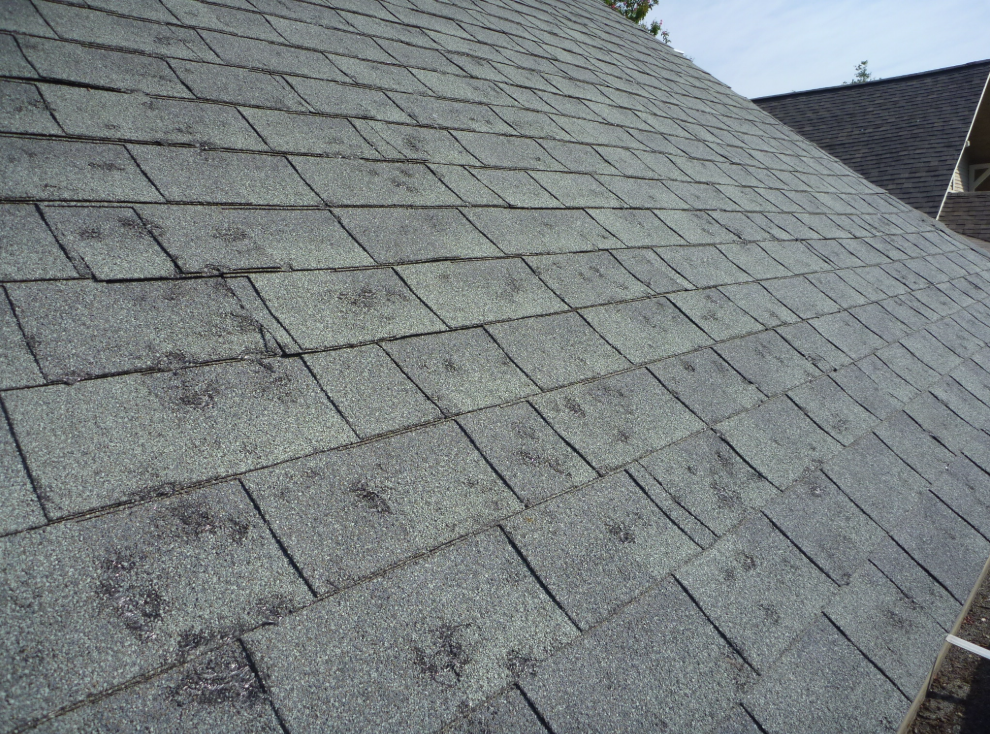
Katy’s Hail Reality
The Insurance Council of Texas consistently ranks Texas as one of the top states in the nation for hail losses, and the Houston-Katy corridor is a major contributor. The Texas Department of Insurance documents how frequently our region takes hits, and NOAA’s Storm Events Database shows the actual event history for your zip code.
The practical takeaway: if you’ve owned your Katy home for more than five years, there’s a strong chance your roof has taken at least one hail hit — whether you filed a claim for it or not. That history is exactly why hail damage insurance in Katy is worth understanding before the next storm, not after.
What Hail Damage Insurance in Katy Actually Covers
A standard Texas homeowner’s HO-3 policy covers hail damage to your roof under the dwelling coverage (Coverage A) portion. That includes:
- Damage to shingles, underlayment, and decking
- Damage to flashing, vents, ridge caps, and pipe boots
- Damage to gutters and downspouts
- Damage to the interior if hail-driven water intrusion follows
- Damage to attached structures (usually)
Detached structures like a shed or detached garage fall under Coverage B and are usually covered but at reduced limits.
That is the coverage. With hail damage insurance in Katy, the wrinkles are in how that coverage pays out.
ACV vs RCV: The Single Biggest Trap in Katy Hail Insurance
This is the piece homeowners miss most often, and it can cost you $5,000–$15,000 on a claim.
RCV (Replacement Cost Value) pays what it actually costs today to replace your damaged roof with materials of like kind and quality.
ACV (Actual Cash Value) pays replacement cost minus depreciation based on your roof’s age.
Here’s what that looks like in practice on a 15-year-old roof with a $15,000 replacement cost:
- RCV policy: Insurance pays $15,000 minus your deductible.
- ACV policy: Insurance pays roughly $7,500 minus your deductible — you eat the depreciation.
Many Texas policies written in the last several years have quietly shifted to ACV for roofs older than 10 or 15 years, or added an endorsement called a “roof settlement schedule” that phases in depreciation as the roof ages. Some carriers now offer only ACV for cosmetic hail damage.
What to do: Pull out your declarations page and search for “ACV,” “actual cash value,” “roof settlement,” or “cosmetic damage.” If any of those apply to your roof, you know before a storm what you’re actually going to receive. That single line drives more hail damage insurance in Katy outcomes than anything else on your policy.
The Wind/Hail Deductible
Your policy has a standard “all other perils” deductible — often $1,000 or $2,500. But most Texas policies also carry a separate, higher wind/hail deductible, typically expressed as a percentage of your dwelling coverage.
Common wind/hail deductibles:
- 1% of Coverage A – on a $400,000 dwelling, that’s a $4,000 deductible
- 2% of Coverage A – $8,000 on the same home
- 5% of Coverage A – $20,000 on the same home
This deductible is triggered on any hail or wind claim, and it’s per-event, not per-year. Homeowners in newer developments in Katy sometimes discover their wind/hail deductible is $10,000+ only when they file a claim, because the higher deductible was the only way to keep premiums affordable at closing.
What to do: Same drill — check your declarations page. If your wind/hail deductible is high enough that a $12,000 roof replacement wouldn’t produce a net insurance payout, you may be effectively self-insuring your roof.
The Claim Filing Window for a Hail Claim in Katy
Under Texas insurance code, you generally have one year from the date of loss to file a hail or wind claim on a homeowner’s policy. Some carriers have shortened this to as little as 180 days. After that window, the claim is denied automatically — regardless of how legitimate the damage is. No part of hail damage insurance in Katy survives a missed deadline.
This is why post-storm inspections matter so much. You cannot file a claim on damage you didn’t know about, and you can’t inspect for damage that happened six months ago and expect the same result you’d get today. If you’re not sure whether a storm produced damage, the answer is to get an inspection promptly — not to wait for leaks.
What Hail Damage Insurance in Katy Does NOT Cover
The exclusions bite homeowners just as hard as the coverage gaps:
Pre-existing damage. If the adjuster determines damage existed before the storm you’re claiming, they’ll deny that portion — and sometimes the whole claim.
Wear and tear. Age-related shingle deterioration, curling, or granule loss from UV is not a covered peril.
Cosmetic damage (on some policies). A growing number of Texas policies exclude “cosmetic hail damage” — meaning if the hail dented your metal roof but didn’t compromise function, they won’t pay.
Damage the adjuster classifies as “not sufficient to replace the roof.” This is where most claim disputes happen. Adjusters will often approve partial repairs when a legitimate assessment supports full replacement.
Improper installation issues. If the original install was defective, that’s a manufacturer or contractor issue, not an insurance claim.
Consequential damage from unaddressed problems. If you knew about a leak and didn’t fix it, and the interior damage grew, they’ll deny the interior claim.
The Claim Process for Hail Damage Insurance in Katy, Step by Step
Here is what a well-run hail claim in Katy looks like:
- Get an independent inspection first. Before you call your insurance company, have a reputable local roofer document the damage with photos and a written report. This gives you an objective baseline. Our Katy TX roofing services include free post-storm inspections with documentation you can hand to your adjuster.
- File the claim with your carrier. Provide the date of loss (the storm date), the type of damage, and any photos you have.
- The insurance company assigns an adjuster who will schedule an inspection.
- Have your roofer present at the adjuster meeting. This is critical. A qualified contractor knows what to point out — bruised shingles, matting damage, granule loss patterns — that an adjuster might miss or downplay. Adjusters are often reasonable, but they’re not roofing specialists.
- Review the scope of loss. The adjuster will produce a document listing exactly what they’re approving and at what price. Compare it line by line to what your roofer says is actually required. Common gaps: missing ice-and-water shield, insufficient underlayment allowance, no drip edge, no starter strip on the correct sides.
- Supplement if needed. If the adjuster’s scope misses items your roofer identifies as necessary, your roofer files a supplement — a formal request for the insurance company to add those items to the covered scope.
- Complete the work. Once scope is agreed and payment issued, the work proceeds. On RCV policies, the insurance company typically holds back the “depreciation” portion until the work is done and invoiced.
Common Reasons Claims Get Denied — And What to Do
- “Not enough damage to warrant replacement.” Get a second opinion. In Texas, if a certain number of shingles per square are damaged in a representative test area, the whole slope typically qualifies. Push back with documentation.
- “Damage is cosmetic, not functional.” Depends on your policy language. Fight it if the damage compromises the shingle’s UV protection or seal.
- “Damage is old / not from this event.” Documentation from a pre-storm and post-storm inspection is your best defense. This is another reason annual inspections matter.
- “Damage is wear and tear.” Legitimate sometimes, unfair often. A qualified contractor’s report can distinguish storm damage from age.
Most denied claims come down to timing and documentation — two things you control long before the adjuster shows up, and two things that decide most hail damage insurance in Katy outcomes.
Contractor vs. Public Adjuster
You have three routes:
- Handle it yourself. Works fine if the claim is straightforward, damage is clear, and the adjuster is reasonable.
- Work with your roofing contractor. A reputable roofer will attend the adjuster meeting and supplement when needed — usually at no separate charge. This is what most Katy homeowners do.
- Hire a public adjuster. Public adjusters work for you, not the insurance company, and take a percentage (typically 10%) of the settlement. Best suited for large or contested claims.
A licensed Texas roofer cannot legally negotiate your claim as an adjuster would — that’s a public adjuster’s role — but your roofer absolutely can and should document damage, communicate directly with the insurance adjuster about scope of work, and file supplements. Whichever route you take, hail damage insurance in Katy comes down to who documents the damage best.
Red Flags to Avoid
Every hail season, storm chasers descend on Katy. Watch for:
- Door-to-door pitches promising “no out-of-pocket cost” or “we’ll cover your deductible”
- Requests for you to sign an “Assignment of Benefits” transferring your claim rights
- Pressure to sign a contract before an inspection is complete
- Contractors without a physical Texas address or verifiable local reviews
- Anyone offering to waive your deductible (this is insurance fraud in Texas)
Work with a local, established roofing company in Katy that will be here next year and the year after. They should be dealing with hail damage insurance in Katy every season, not just after a big storm.
The Bottom Line on Hail Damage Insurance in Katy
Your policy covers hail damage — but the fine print determines whether that coverage actually protects you. Know your ACV/RCV status, your wind/hail deductible, and your filing window before a storm hits. Get inspected within 30 days after any significant hail event. Bring a qualified contractor to your adjuster meeting. And don’t sign anything with a storm chaser. Those four things decide most hail damage insurance in Katy outcomes.
If you think a recent storm may have damaged your roof, request a free hail damage inspection or call (281) 769-4282. We’ll document the damage, meet with your adjuster, and make sure you get the settlement you’re actually owed.