
An annual roof inspection is the cheapest piece of roof maintenance a Katy homeowner can buy, and it is the one most people skip until a ceiling stain forces the issue. Between hail-heavy spring storms, hurricane season, brutal summer UV and near-constant humidity, roofs in the 77449, 77450, 77493 and 77494 zip codes age faster than manufacturer warranties assume.
The short answer: once a year, every year, plus a check after any major storm.
That baseline matches what the National Roofing Contractors Association recommends nationally. In Katy the “plus after storms” part carries more weight than most homeowners realize, because our claim deadlines are short and hail damage is quiet. Below is when to schedule, what a real inspection covers, what it should cost, and the point at which once a year stops being enough.
Why Katy’s Climate Demands More Attention
Katy sits in one of the more punishing zones for roofing materials in Texas. Here’s what your roof deals with in a typical year:
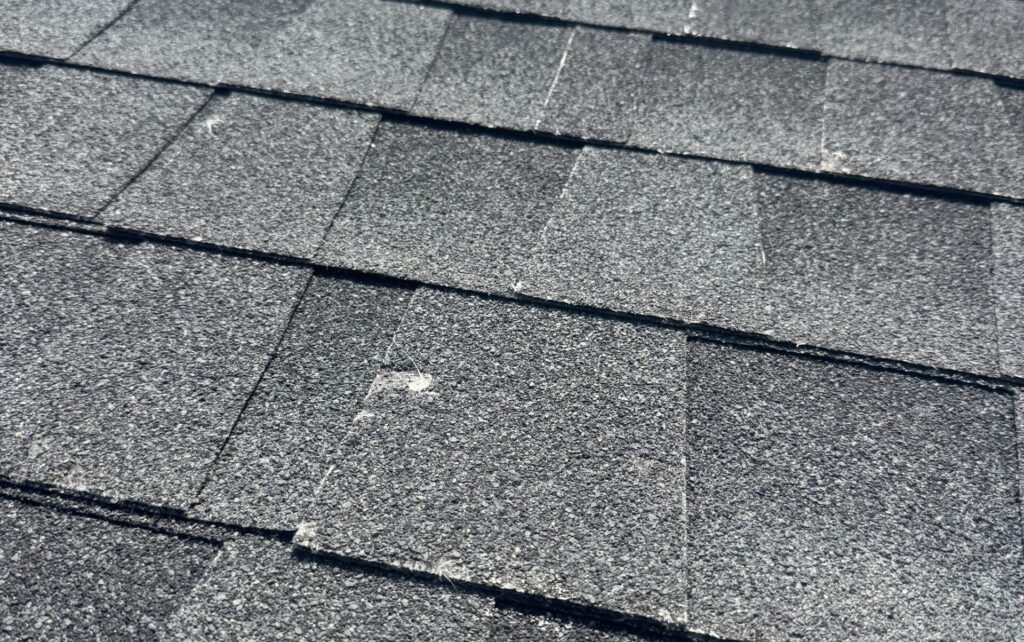
Hail. Harris and Fort Bend counties see multiple hail events every year, and Katy sits right in the sweet spot for spring supercell storms rolling in from the west. Even hail smaller than a quarter can bruise asphalt shingles enough to compromise the granules that protect the mat from UV. NOAA’s Storm Prediction Center storm reports show how frequently our area gets hit.
Hurricane-force winds. You don’t need a direct hit from a named storm to lose shingles. Sustained winds of 50–60 mph — which we see in outer bands and severe thunderstorms — can lift shingles, break the factory adhesive seals, and expose the underlayment.
UV and heat. Summer in Katy means 90-plus degree days for months. Shingle surfaces routinely exceed 150°F, which accelerates granule loss, adhesive breakdown, and shingle curling.
Humidity and rapid temperature swings. The daily heating and cooling cycle expands and contracts every material on your roof. Metal flashing, sealants, and shingles all fatigue faster here than they would in a drier climate.
The result? A shingle rated for 30 years in Arizona might realistically deliver 18–22 years of protection in Katy. Regular inspection is how you catch problems while they’re still cheap to fix.
The Baseline: An Annual Roof Inspection, Every Year
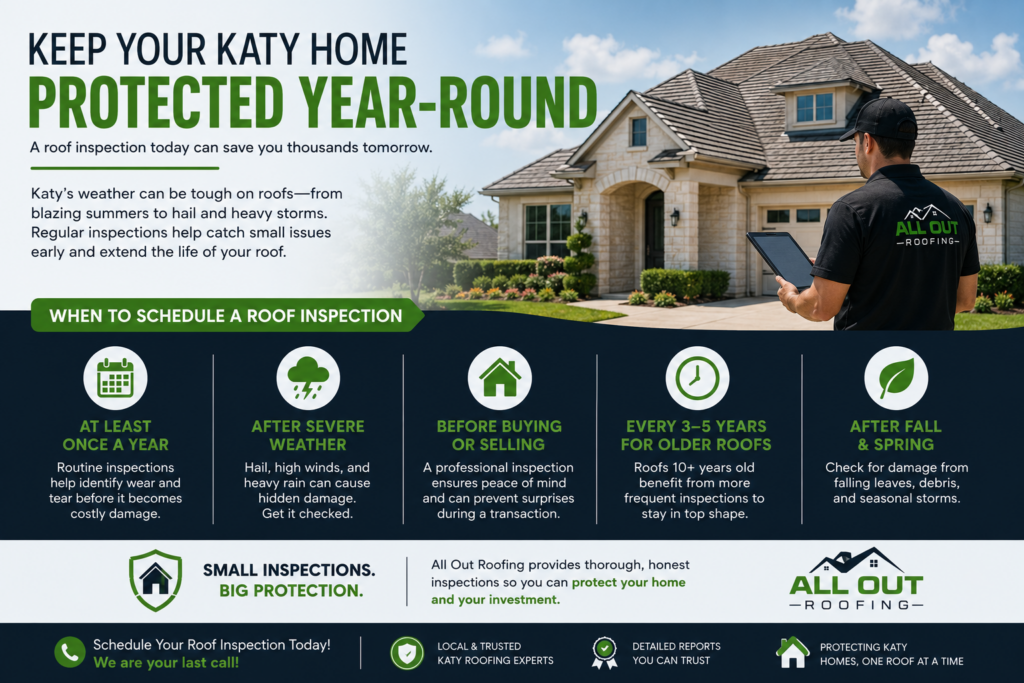
For any roof in Katy — regardless of age — put an annual roof inspection on the calendar. The best windows are:
- Late winter (February/March) before spring storm season, so you know the roof is sound heading into peak damage months.
- Late fall (October/November) after hurricane season winds down and before winter cold snaps.
Annual inspections catch the small stuff: a lifted shingle, a cracked pipe boot, hairline flashing gaps, granule accumulation in gutters. All of these are $200–$500 repairs if caught early. Ignored, they become $2,000+ repairs when water finds a path into your decking.
After Every Major Storm
This is the rule most homeowners skip. Hail and wind damage isn’t always visible from the ground, and it isn’t always dramatic. A hail impact might look like nothing more than a slightly darker spot on a shingle. But under the surface, the granule mat is compromised, and UV will finish the job over the following 12–24 months — long after your insurance claim window has closed.
Texas insurance policies typically require you to file a hail or wind claim within one year of the date of loss (details from the Texas Department of Insurance). If you wait until leaks appear to call for an inspection, you’ve almost certainly lost your claim. Get an inspection within 30 days of any significant storm.
What counts as “significant”?
- Hail of any size that hits your property (check radar history at NOAA’s Storm Events Database)
- Sustained winds over 50 mph
- Any storm that produced debris on your lawn or visibly damaged nearby homes
- Named tropical systems, even weakened ones passing through the Houston area
Age-Based Frequency
Your roof’s age changes the schedule:
- 0–10 years old: Annual inspection is fine unless a storm hits.
- 10–15 years old: Move to semi-annual inspections (spring and fall). This is when small defects start compounding.
- 15+ years old: Semi-annual is the floor. Start planning for replacement and getting comparison quotes so you aren’t scrambling when a leak forces the issue. If you’re within a year or two of selling, this is also when roof age starts affecting your home value.
- 20+ years old: You’re on borrowed time in Katy’s climate. Inspect every six months minimum, and start budgeting for replacement.
Signs You Need an Inspection Now — Not Later
Don’t wait for your next scheduled check if you see:
- Shingle granules collecting in gutters or at downspout outlets
- Curled, cupped, or missing shingles visible from the ground
- Dark streaks or discoloration (could be algae, could be granule loss)
- Interior ceiling stains, especially near vents or chimneys
- Daylight visible through the attic roof deck
- Sagging areas along the ridgeline
- Nail heads visible through shingles (“nail pops”)
- Rusted or damaged flashing around chimneys, skylights, or valleys
Any single one warrants a professional look. Multiple signs together usually mean damage has been progressing for a while.
What a Real Annual Roof Inspection Includes
A legitimate inspection — not a five-minute drive-by — should cover:
- Ground-level exterior review. Overall condition, obvious damage, gutter and drainage evaluation.
- Roof surface walk (or drone survey where safe). Every shingle field, valley, ridge, and hip.
- Penetration inspection. All vents, pipe boots, skylights, chimneys, and flashing points.
- Attic inspection. Underside of decking for moisture, staining, or daylight. Ventilation adequacy. Insulation condition.
- Documented report with photos. You should walk away with a written summary and images of anything of concern.
At All Out Roofing, our inspection process follows this exact sequence and produces a full photo report — not a verbal “yeah, looks fine.” That documentation matters when you file an insurance claim or when you’re deciding whether to repair or replace. Our Katy roofing contractor team handles the walk personally and delivers the report in writing.
DIY Inspections: What You Can and Can’t Do
You can do a ground-level visual check anytime, and you should — a five-minute walk around your house every couple of months catches obvious problems fast. Use binoculars if you have them, and look for the ground-visible signs above.
What you should not do is get on your roof. Katy’s roof pitches, combined with heat-softened shingles in summer and slick conditions during humid mornings, make this legitimately dangerous even for people comfortable with heights. You also risk causing damage — footprints on hot shingles displace granules — and you don’t have the trained eye to spot the subtle stuff like fractured mat under intact granules. Leave the roof walk to a pro.
What an Inspection Should Cost
Straightforward: a legitimate professional roof inspection in the Katy area should cost between $0 and $250. Many roofing companies — including us — offer free inspections, particularly after storms, because the assessment is part of our sales process. Home inspectors doing a full property review typically charge $75–$250 for the roof portion.
Be cautious of “free inspections” that turn into high-pressure sales pitches. A reputable roofing company in Katy will document findings, explain what they see, and give you a written report whether you buy anything or not.
What to Do With the Findings
After an inspection, you’re generally in one of three buckets:
Bucket 1: All clear. Great. Schedule your next annual check and monitor for storms.
Bucket 2: Minor repairs needed. Sealant, a few replacement shingles, a new pipe boot. Handle these promptly — they’re cheap now, expensive if ignored.
Bucket 3: Significant damage. Storm-related damage should trigger an insurance claim within your policy’s window. Age-related deterioration usually points toward planning replacement in the next 12–24 months. Get comparison quotes and understand your financing options before you’re in a leak-emergency situation.
The Bottom Line on an Annual Roof Inspection
For Katy homeowners, the answer to “how often” comes down to four rules:
- An annual roof inspection as the baseline
- After every significant storm, within 30 days
- Semi-annually once your roof passes 10 years old
- Immediately if you see any of the warning signs above
The math is not complicated. An annual roof inspection costs between nothing and a couple hundred dollars. Deferred maintenance turns a small flashing repair into a rebuild of your decking, insulation and interior finishes. Catch things early, keep your documentation current, and you get the full service life out of the roof you already paid for.
Two related pieces if you want to go further. Before you book anyone, it is worth knowing exactly what a roofer should be looking at — that is the roof inspection checklist we work from, published in full. And if a storm just came through, the timing rules are tighter and the stakes are higher, which we cover separately in our guide to storm damage roof inspections in Texas. The annual roof inspection itself sits inside a wider season-by-season roof maintenance calendar for Katy homes.
If it has been more than 12 months since your last inspection, or we have had a storm you never checked on afterward, contact our Katy roofing team or call (281) 769-4282. We serve Katy, Cypress, Fulshear and the greater Houston area, and you get the full photo-documented report either way.
What an Annual Roof Inspection Will Not Catch
Worth saying plainly, because overselling the inspection is how homeowners end up feeling misled two years later. An annual roof inspection is a visual and physical assessment of accessible surfaces. It is not a guarantee, and there are real limits to it.
It will not find a leak that is not leaking yet. A pinhole in a pipe boot seal or a hairline separation in a valley can pass a careful inspection and still let water through during a wind-driven rain that pushes water uphill. That is why the post-storm check exists as a separate rule rather than something the annual visit covers in advance.
It will not see under intact shingles without cause. A roofer lifts shingles where the evidence points — a soft spot underfoot, a suspicious granule pattern, a stain in the attic below. Nobody lifts every shingle on a 30-square roof, and anyone who says they did is telling you something else.
It will not settle an insurance claim. The inspection produces documentation. Your carrier’s adjuster makes the coverage decision, and the two do not always land in the same place. What good documentation does is give you something specific to point at when they disagree.
It will not make an old roof young. Past about 18 years in this climate, the inspection stops being a maintenance tool and starts being a planning tool. The useful question shifts from “what needs fixing” to “how many seasons do I have to budget for a replacement.” A roofer who will not have that conversation with you is not doing you a favor.
About the author
About the author — Brent Burgin is the owner and operator of All Out Roofing, a licensed local roofing contractor serving Katy, Houston, Cypress, Fulshear and surrounding communities. Brent has lived in the Katy/Fulshear area since age 7 and is also a licensed Texas real estate agent (TREC #630213, with Terra Point Realty since 2013) — a cross-domain background that helps homeowners think through roof decisions in the context of their home’s overall value and any pending real estate transactions. All Out Roofing is a CertainTeed Select ShingleMaster and installs GAF and Owens Corning shingle systems.
All Out Roofing, LLC — 25220 Kingsland Blvd, Ste 100, Katy, TX 77494. Available 24/7 for storm response.