A builder grade roof is the roof a production builder puts on a new house to pass inspection and hand over the keys. In Katy, that describes most roofs in master-planned communities like Cinco Ranch, Elyson, Cane Island and Jordan Ranch when the homes were new. It is not a defective roof. It is a minimum roof, and knowing where the minimum sits tells you what to watch.
I’m Brent Burgin. I own All Out Roofing in Katy and I’m the inspector of record on our roof reports. Here is what usually goes into a builder grade roof, where those roofs tend to show wear first, and when an upgrade is worth the money and when it isn’t.
What a Builder Grade Roof Actually Means
“Builder grade” isn’t a product line or a code term. It is shorthand for the lowest-cost package that meets code and the builder’s spec sheet. A builder may put the same roof on hundreds of homes in one section, so a small saving per house adds up fast for them.
That doesn’t mean the crew did bad work. Some builder roofs are installed well and hold up fine. But the material choices are usually the entry level of each category, and the schedule is tight. When something was rushed, it tends to show up at the edges and the openings, not in the middle of a slope.
So the useful question isn’t “is my roof builder grade?” Most new Katy roofs are. The useful question is which parts of your builder grade roof were done at the minimum, and whether that minimum is enough for your house.
What Usually Goes Into a Builder Grade Roof
Specs vary by builder and by year, so check your own house. These are the patterns we see most on newer Katy roofs:
- Entry-level architectural shingles. Older builder homes may still have three-tab shingles.
- Standard synthetic or felt underlayment, without upgraded ice-and-water membrane beyond what code requires.
- Starter strip and ridge cap that may not match the shingle maker’s own accessories.
- Box vents or a short run of ridge vent, often paired with soffit intake that is partly blocked by insulation.
- Basic rubber pipe boots and painted metal at walls and chimneys.
- OSB roof decking at the thickness the plans call for.
Each item on that list can be fine on its own. The trouble starts when several minimums stack up on one roof. A basic shingle with weak ventilation and a cheap pipe boot will age faster in Katy heat than the same shingle on a well-vented attic.
If you want to know which shingle you have, our post on asphalt vs architectural shingles shows how to tell them apart from the ground.
Where a Builder Grade Roof Shows Wear First
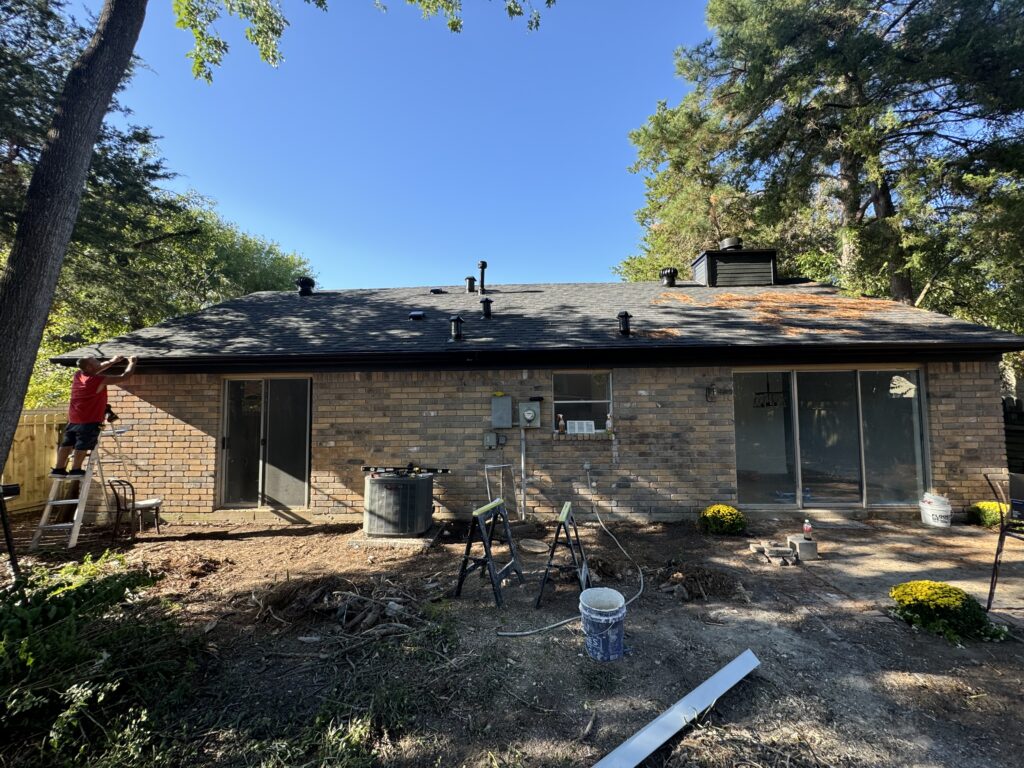
On our inspections of newer Katy homes, problems on a builder grade roof rarely start in the open field of shingles. They start where the roof changes direction or something pokes through it.
- Pipe boots. The rubber collars around plumbing vents dry out and crack, often years before the shingles wear out.
- Wall flashing. Where a lower roof meets a two-story wall, missing or short kick-out flashing can send water behind the siding or brick.
- Valleys. Closed-cut valleys are fast to install, but a shingle cut short or a nail too close to the center can leak.
- Ridge and hips. Ridge cap that wasn’t fastened well is often the first thing a strong wind lifts.
- Nail placement. High nails, crooked nails and overdriven nails weaken how well a shingle holds in a storm.
You can’t see most of that from the driveway. A leak inside also rarely sits right under the source, which is why our guide to roof leak detection starts in the attic, not on the ceiling.
Ventilation: The Builder Grade Roof Weak Spot Nobody Sees
If I had to pick one thing that shortens the life of a builder grade roof in Katy, it’s attic ventilation. A hot attic bakes shingles from below, and our summers already bake them from above.
The building code sets a floor for venting. The Building America Solution Center at PNNL explains that under the IRC, attic net free ventilating area “should not be less than 1/300 of the area of the attic space,” with conditions. It also notes that “no more than 50% and no less than 40%” of the required vent area should be high on the roof, with the rest low at the soffits.
That balance is where builder roofs often fall short. Exhaust vents get installed on the roof, but the soffit intake is painted over, blocked by blown insulation, or simply not enough. An attic with exhaust and little intake can pull conditioned air out of the house instead of hot air out of the attic.
Our post on attic ventilation requirements covers how the code applies in Harris and Fort Bend County. Fixing ventilation on a reroof usually costs far less than living with the shingle damage it causes.
Builder Warranty vs Roof Warranty
New homeowners often assume the roof is covered for decades. Usually there are two different promises, and they cover different things.
The builder’s warranty covers workmanship for a limited period set in your purchase paperwork. Read it for the roof terms, the claim process and who you call. The shingle manufacturer’s warranty covers material defects, and its terms depend on how the roof was installed and whether it was registered. A long number on the bundle wrapper doesn’t mean every part of the roof system is covered that long.
Find your closing file and look for both. If you can’t find either one, ask the builder’s warranty department in writing. Our guide to roofing warranties explains what each kind covers, what voids them, and how they transfer when you sell.
Should You Upgrade a Builder Grade Roof?
Here is the honest answer: not always. A builder grade roof in good shape on a well-vented attic can serve you for years. You don’t need to tear off a sound roof because a neighbor told you yours is “cheap.”
An upgrade starts to make sense in a few situations:
- The roof has taken hail or wind damage and you’re replacing it anyway. That’s the cheapest time to improve ventilation, flashing and shingle class.
- Your insurance company is pressing on roof condition or age. TDI notes that “Your insurance company will inspect your roof when you apply for insurance.”
- You plan to stay long enough to get value from an impact-rated shingle or a better ventilation setup.
- An inspection turns up repeated small leaks at boots, walls or valleys that point to a pattern, not one bad spot.
The Texas Department of Insurance says in its guide to replacing your roof to “Consider using roofing materials less likely to be damaged by wind, hail, or fire,” and that “Your insurance company might give you a discount for using them.” Ask your agent for the actual number before you pay for an upgrade on that basis alone.
When the roof is sound, smaller fixes often do more for less money: new pipe boots, opening blocked soffits, adding kick-out flashing, or resetting loose ridge cap.
What to Check on Your Builder Grade Roof
You can do the first pass yourself without climbing on anything:
- Find the closing file, the builder warranty and any shingle warranty registration.
- Look at the roof from the ground with binoculars for lifted ridge cap, missing shingles and dark streaks at the edges.
- Check the soffits. Vents that are painted over or blocked from above won’t move air.
- Look in the attic on a sunny afternoon for daylight at penetrations, and on a rainy day for damp decking.
- Note any ceiling stains near bathrooms and two-story walls.
Then have the roof looked at by someone who will go up and check the details that matter: fasteners, flashing, boots and the attic. TDI also suggests you “Hire a roof inspector every few years to find issues early.” Our post on how often to get an annual roof inspection covers timing.
Get a Straight Read on Your Builder Grade Roof
If you own a newer home in Katy, Fulshear or Richmond and want to know what your builder grade roof really has, call All Out Roofing at (281) 769-4282. We’ll inspect it, show you photos of what we find, and tell you plainly whether it needs work now, later, or not at all.
About the author
About the author — Brent Burgin is the owner and operator of All Out Roofing, a licensed local roofing contractor serving Katy, Houston, Cypress, Fulshear, and surrounding communities. Brent has lived in the Katy/Fulshear area since age 7 and is also a licensed Texas real estate agent (TREC #630213, with Terra Point Realty since 2013) — a cross-domain background that helps homeowners think through roof decisions in the context of their home’s overall value and any pending real estate transactions. Brent holds CertainTeed Master Craftsman and Shingle Quality Specialist credentials, and All Out Roofing installs CertainTeed, GAF and Owens Corning shingle systems.
All Out Roofing, LLC — 25220 Kingsland Blvd, Ste 100, Katy, TX 77494. Available 24/7 for storm response.