
Think your roof is too new to worry about? Think again.
Most homeowners think of their roof as a single thing — shingles. But a properly installed asphalt shingle roof is actually a layered system, and each layer serves a specific purpose. When one layer starts to fail, the layers beneath it take on more stress than they were designed to handle. What starts as a cosmetic issue becomes a structural one faster than most people realize.
Here’s a breakdown of every layer in your roofing system, what it does, and what the warning signs look like when it starts to go.
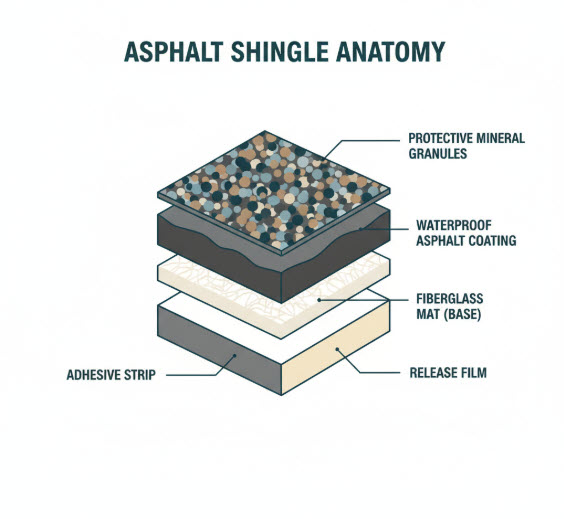
Layer 1: The Granule Surface
The outermost layer of an asphalt shingle isn’t asphalt at all — it’s a dense coating of ceramic-coated granules embedded into the top surface. These granules do more work than most people give them credit for. They reflect UV radiation, add fire resistance, protect the asphalt beneath from direct sun exposure, and give the shingle its color.
What damage looks like: Granule loss is one of the first visible signs of roof damage that a roof is aging or has sustained impact damage. On a healthy shingle, the granules are tightly packed and uniform. On a failing one, you’ll see bare, shiny spots where the asphalt mat underneath is exposed — sometimes across the whole shingle face, sometimes in circular or concentrated patterns from hail strikes.
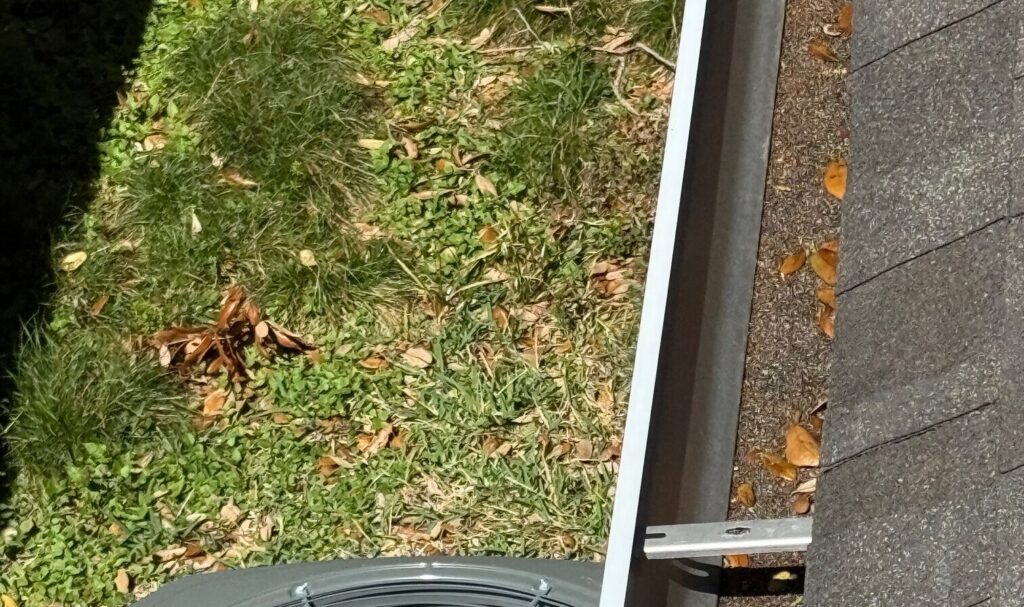
You’ll also find evidence in your gutters. Heavy granule accumulation in the gutter trough is a major red flag, especially after a storm. It means your shingles are actively shedding their protective layer with each rain event.
Once granules are gone, UV degradation of the asphalt layer accelerates dramatically. What might have been a 5-year problem becomes an 18-month problem.
Layer 2: The Asphalt Coating
Beneath the granules is the asphalt layer — a petroleum-based coating that provides the shingle’s waterproofing and flexibility. In a quality shingle, this layer is thick, pliable, and reinforced. In an aging or substandard shingle, it becomes brittle, cracks, and eventually allows water to pass through.
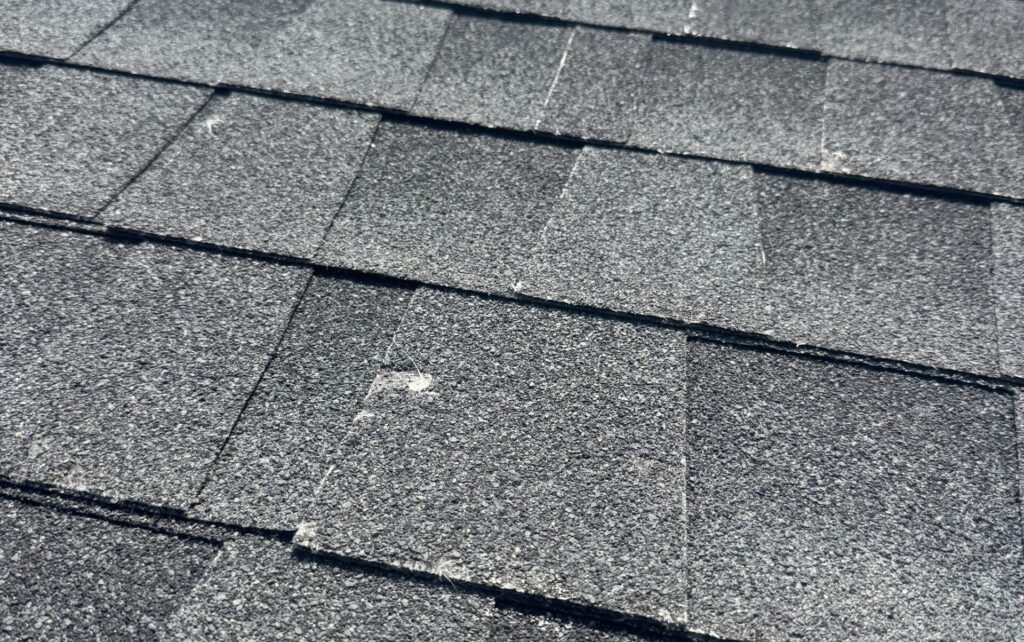
What damage looks like: Once granule loss exposes the asphalt to direct sun, the oils in the asphalt begin to oxidize and evaporate. The surface turns from a dark, flexible material into a dry, chalky, brittle one. You’ll see cracking along shingle joints, through the tabs, and running diagonally across the face of the shingle.
Thermal cracking is particularly common in the Houston area, where extreme summer heat and occasional winter freezes cause repeated expansion and contraction. What starts as hairline cracks widens over time until the shingle can no longer form a continuous water barrier. Once those cracks extend through the full thickness of the shingle, you have open pathways for water intrusion at every course.
Layer 3: The Fiberglass Mat (Reinforcement Core)
The structural backbone of a modern asphalt shingle is a woven fiberglass mat. This layer gives the shingle its dimensional stability and tear resistance. It’s what keeps the shingle intact in high winds and prevents it from stretching or deforming under load.
What damage looks like: The mat is rarely visible unless the shingle is severely deteriorated. When you can see it — a pale, grayish, fibrous texture showing through where the asphalt has fully eroded — the shingle is at or past end-of-life. A roof showing mat exposure across multiple areas is not a candidate for repair; it needs to be replaced.
Mat damage can also occur from impact. Large hail can fracture the fiberglass weave without necessarily punching through the granule surface immediately, causing what’s called a “soft spot” or internal delamination. The shingle looks intact from a distance but has lost its structural integrity at the impact point. Over time, those compromised areas crack, lift, and fail.
Layer 4: The Self-Seal Strip
Running along the back lower edge of most shingles is a strip of thermally activated adhesive. When installed correctly and exposed to heat, this strip bonds to the shingle below it, creating a wind-resistant seal across the entire roof surface. This is one of the most underappreciated components in the system.
What damage looks like: Seal strip failure doesn’t look like much from a distance — until it becomes a lifted or missing shingle. In older roofs, the adhesive dries out and loses its bonding strength. In roofs that were installed during cold weather without proper precautions, the strip may never have bonded at all.
Once the seal strip fails on even a few shingles, wind infiltration gets underneath the shingle edge, creating flutter. That repeated flexing fatigues the shingle at its tab line, accelerating cracking and eventual tab loss. A roof with widespread seal strip failure is highly vulnerable to wind damage even in storms that would otherwise cause little harm.
Layer 5: The Underlayment
Beneath the shingles is a layer of roofing underlayment — traditionally 15 or 30 lb felt paper, and in modern installations a synthetic underlayment or peel-and-stick ice and water shield in critical areas. This layer is your secondary line of defense. If water gets past the shingles, underlayment is what stands between it and your roof deck.
What damage looks like: You typically don’t see underlayment failure from outside — you see it from inside, as moisture staining on the decking, attic insulation saturation, or ceiling stains in the living space. By the time underlayment failure is visible, water has likely been infiltrating for weeks or months.
Underlayment also deteriorates with age even without direct exposure. Felt paper, in particular, can dry out, crack, and lose its integrity over time. In areas where shingles are missing or severely cracked, the underlayment is often the only thing preventing active leaking — and it’s not designed to perform that role long-term.
Not all felt is the same — see the types of roofing felt used in Texas installations.
Layer 6: The Roof Deck (Sheathing)
The foundation of the entire roofing system is the structural deck — typically 7/16″ or 1/2″ oriented strand board (OSB) or plywood, nailed to the roof rafters. Everything above it depends on the deck being solid, flat, and dry.
What damage looks like: Deck damage is the most serious and expensive problem in the roofing system. Once moisture consistently reaches the deck, the wood begins to soften, delaminate, and eventually rot. Soft spots underfoot when walking the roof are a clear sign. From below, you’ll see staining, sagging, or in advanced cases, visible deterioration.
Deck replacement adds cost and time to any roofing project, and it’s almost always the result of long-deferred maintenance or a roof that was allowed to fail past the point where the shingles alone were the problem. Catching granule loss or cracking early — at the surface — is far less expensive than replacing decking.
Why Layer Damage Is Never Just "Surface Level"
The reason a roof inspection in Katy TX matters is that shingle damage is rarely isolated. Each layer protects the one beneath it. Once the granules are gone, UV destroys the asphalt. Once the asphalt cracks, water reaches the underlayment. Once the underlayment fails, the deck is compromised. Once the deck rots, you’re not replacing a roof — you’re repairing a structure.
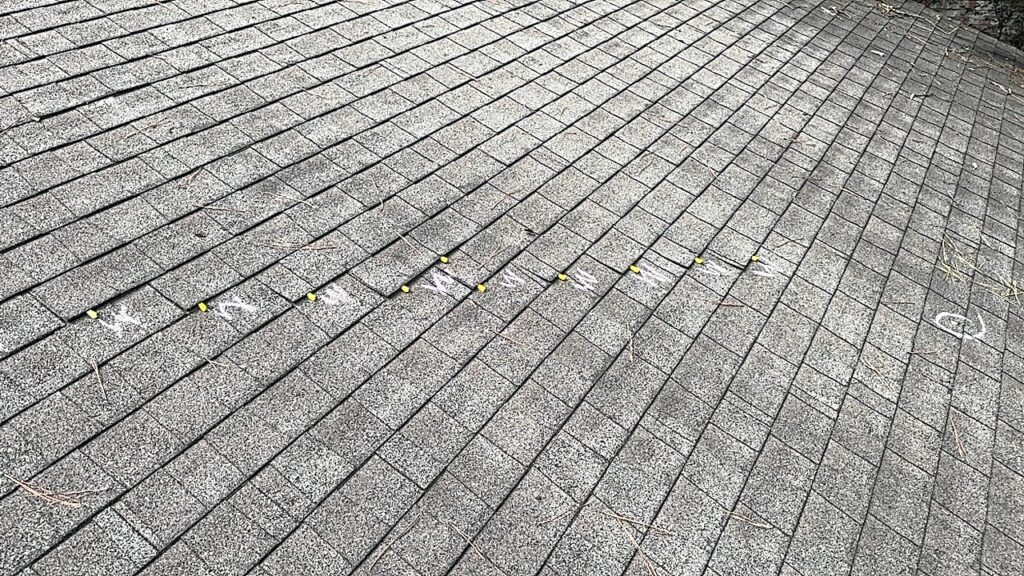
The photos that follow show a real Houston-area roof in multiple stages of this progression: granule loss accumulating in the gutters, cracking through the asphalt layer at the shingle joints and tabs, and in more advanced cases, full bleaching of the shingle surface with visible mat exposure. This is not a roof with years left. It’s a roof in active failure.
If you’ve seen granules in your gutters after the last rain, or noticed cracks, lifting edges, or discoloration on your shingles, the time to act is before the damage reaches your deck — not after.
Start with a free roof inspection. We’ll photograph every layer we can see and tell you plainly whether you need a repair or a roof replacement in Katy or the Houston area. Schedule your free inspection or call (281) 769-4282.
Frequently Asked Questions
How long does a roof last once granule loss starts?
It depends on how far along the loss is and what triggered it. Normal granule shedding from aging is gradual — a roof losing granules uniformly over several years may still have 5 to 7 years of serviceable life if the underlying asphalt is still intact. But if granule loss is concentrated, accelerating, or accompanied by cracking, that timeline shrinks fast. In the Houston area, where summer UV exposure is intense and heat cycles are severe, a shingle that’s lost its granule layer can deteriorate to the point of active leaking within one to two seasons. Don’t measure it in years once you see bare asphalt — measure it in storm seasons.
Can I repair individual layers, or does the whole roof need replacing?
Isolated repairs are appropriate when damage is genuinely limited — a few cracked or missing shingles, a failed flashing, a small area of underlayment compromise. But layer damage is rarely isolated. Granule loss, cracking, and seal strip failure tend to occur across the entire roof surface because the shingles were all installed at the same time and age together. Patching a few shingles on a roof with widespread asphalt cracking is like replacing one worn tire on a set that’s all at the same mileage. It buys time but doesn’t solve the problem. A qualified inspector can tell you whether your roof is a repair or replacement candidate — and the answer matters a lot for both your budget and your insurance claim strategy.
What does hail damage look like compared to normal wear?
Normal wear produces uniform granule loss and cracking that follows the shingle layout — along joints, at tab slots, across the face in horizontal patterns. Hail damage is different. It creates impact marks at random locations across the shingle surface, often with a darker center where the granules have been knocked away and the asphalt is freshly exposed. In close inspection, you may feel a soft or spongy area at the impact point where the fiberglass mat has been fractured beneath the surface. On metal components — vents, flashing, gutters, AC units — hail leaves distinct dents that serve as physical evidence of the storm event. If your neighbor got a new roof after the last storm and yours “looked fine,” it’s worth having an independent inspection. Hail damage is frequently invisible from the ground and from street level.
Will my insurance cover layer damage?
Homeowner’s insurance covers sudden and accidental damage — hail strikes, wind events, fallen debris — not gradual deterioration from age or lack of maintenance. So the answer depends on the cause. If your granule loss and cracking are the result of a qualifying storm event, your policy very likely covers full roof replacement at replacement cost value (RCV), minus your deductible. If the damage is primarily age-related, insurance typically won’t pay. The challenge is that storm damage and age-related wear often look similar to an untrained eye — and insurance adjusters are not always thorough. Having a storm restoration contractor who understands Xactimate, knows how to document storm damage, and can advocate on your behalf during the roof insurance claim process makes a significant difference in claim outcomes.
How do I know if my roof deck is damaged without going into the attic?
The attic is actually the best first place to look — grab a flashlight and check for daylight coming through, dark staining on the underside of the sheathing, soft or spongy wood, or insulation that looks wet or compressed. From the exterior, soft spots underfoot when walking the roof are a strong indicator. You may also notice visible sagging or waviness in the roofline from the ground, particularly along the eave line or between rafters. Inside the living space, ceiling stains that reappear after being painted over, or stains that spread after heavy rain, suggest that moisture has been reaching the deck for some time. By the time deck damage is obvious from inside the house, it’s typically been developing for months. If you’re unsure, a professional roof inspection in Katy or Houston will give you a definitive answer.
How often should I have my roof inspected?
The general recommendation is once a year and after any significant storm event — high winds, hail, or major rainfall. In the Katy and greater Houston area, that practically means inspecting every spring before hurricane season and again in the fall after it. Roofs over 10 years old warrant more frequent attention, and any roof over 15 years should be assessed annually by a professional regardless of how it looks from the ground. Most reputable roofing contractors offer free inspections with no obligation. There’s no reason to wait until you see a ceiling stain to find out what condition your roof is actually in.