
Winter roof damage in Katy doesn’t look like the pictures you see from Minnesota. We don’t get months of snow sitting on the roof, and ice dams are rare here. What we do get is a hard freeze every few years, strong wind behind cold fronts, and now and then an ice storm that drops limbs on houses. Each of those can hurt a roof, and some of the damage doesn’t show up until the next rain.
I’m Brent Burgin, owner of All Out Roofing in Katy. This post covers what a Gulf Coast winter actually does to a shingle roof, how to tell roof damage from a frozen pipe, what Texas insurance usually covers, and what to check once the weather warms up.
Why Winter Roof Damage Looks Different on the Gulf Coast
Up north, winter roof damage usually means ice dams. Snow melts over a warm attic, the water runs down and refreezes at the cold eave, and it backs up under the shingles. That needs snow cover that stays put for days. In Katy, snow usually melts the same day it falls, if it falls at all.
Our problems are different. Cold makes asphalt shingles stiff. Fronts bring gusty north wind. Ice adds weight to trees and power lines. And many homes in this area have water lines, and often the water heater, up in the attic, where a hard freeze can split a pipe right above a bedroom ceiling.
So the question after a Katy freeze isn’t “do I have an ice dam?” It’s “did anything get hit, lifted or cracked, and is that water stain the roof or the plumbing?”
What the 2021 Freeze Showed Katy Homeowners
The February 2021 storm is the one everybody remembers. The National Weather Service’s Houston/Galveston office storm summary lists a reading of 12°F at Houston Intercontinental on the morning of February 16, and a snowfall report of 2.0 inches in Katy on February 15. Freezing rain and sleet reports came in across Fort Bend and Waller counties too.
For roofs, the lesson from that week was simple. Most of the water damage people saw afterward wasn’t from the roof at all. It was from pipes that froze and split in attics and walls, then let go when things thawed. The roof damage that did happen came mostly from falling limbs, ice on the edges, and people walking on frozen shingles to knock off ice. That last one is a mistake. Frozen shingles crack underfoot.
Common Types of Winter Roof Damage in Katy
Here is what I look for when someone calls about winter roof damage after a cold snap:
- Limb strikes: punctures, crushed shingles and broken decking where an ice-loaded branch came down
- Wind-lifted shingles: tabs that were bent back by gusts behind a cold front and didn’t reseal
- Cracked shingles: brittle tabs broken by foot traffic, ladders or a limb sliding across them
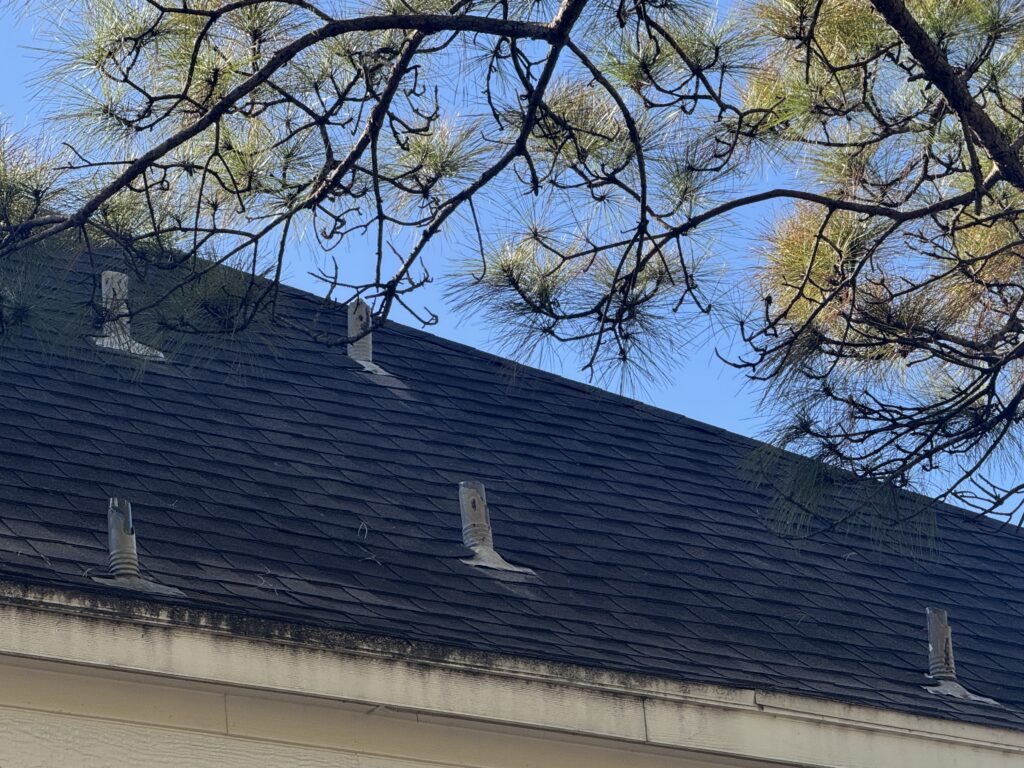
- Pipe boot damage: old rubber collars that split in the cold and start leaking at the next rain
- Gutter and edge damage: gutters pulled loose by ice weight or a falling branch, and bent drip edge
- Attic moisture: condensation or frost on the underside of the decking when warm, damp house air hits a cold roof deck
None of these are dramatic from the street. A lifted shingle or a split pipe boot can look fine from the driveway and still let water in for months. That’s why our post on roof leak detection starts with the point that the stain on your ceiling is rarely right under the hole.
Cold Shingles, Wind and Sealant Strips
Asphalt shingles are held down by nails and by a strip of sealant that bonds each shingle to the one below it. That sealant activates with heat from the sun. On a roof that has been through a few Texas summers, the strips are bonded well. On a roof installed in a cool stretch, they may not have fully sealed yet.
Shingles that haven’t sealed are the ones that lift when a strong north wind comes through. Once a tab bends back far enough, it creases. A creased shingle won’t lie flat again, and that is a common form of winter roof damage that people miss. Our guide to roof wind damage shows what a creased or unsealed tab looks like.
This doesn’t mean you can’t put a roof on in winter here. You can. Crews just need to watch the temperature and follow the manufacturer’s cold-weather instructions, which can include hand-sealing tabs in some conditions.
Is It Winter Roof Damage or a Frozen Pipe?
This is the most useful question to ask when water shows up on a ceiling after a freeze. The answer changes who you call and how the insurance claim is handled.
A few clues help. If the water showed up while it was dry and below freezing, or right as things thawed, plumbing is the first suspect. If it showed up during or right after rain, the roof is more likely. Water that keeps coming with the main water shut off is not a supply-line leak. And a wet spot near the attic water heater or a plumbing run points to the pipes.
The Texas Department of Insurance tells homeowners to “cover indoor pipes in unheated areas, like an attic or a garage” in its guide to preparing for a winter freeze. If you’re not sure, shut off the water at the main, then call a plumber and a roofer. Many times the honest answer from a roofer is “this one isn’t yours.”
What Insurance Usually Covers After a Freeze
Every policy is different, so read yours or call your agent. In general, TDI says “Most insurance pays for ‘sudden and accidental’ damage” and lists frozen pipes as a common example. A limb that falls on the roof during an ice storm is also a sudden event.
There are limits. TDI’s winter safety tips warn that “Home and renters policies might not pay for damages caused by frozen pipes” and suggest asking your agent about coverage for sudden and accidental water damage. Wear and tear is also excluded. A pipe boot that was already cracked from age, then leaked after a freeze, may not be covered.
If you do have winter roof damage, the claim steps are the same as for hail. Take photos, stop more water from getting in, and keep receipts for any tarp or emergency work. Our roof insurance claims process guide walks through the rest, including the deadlines Texas law sets for the insurer.
Attic Condensation in Cold Weather
Not all winter roof damage comes from outside. On a cold night, the underside of the roof deck can be the coldest surface in the house. Warm, humid air from inside rises into the attic through gaps around light fixtures, the attic hatch and bath fans. When it hits that cold decking, it condenses. If enough builds up, it drips onto the insulation and can stain the ceiling, which looks a lot like a roof leak.
The fix is usually not the shingles. It’s air sealing between the house and the attic, bath fans that vent outdoors instead of into the attic, and balanced intake and exhaust ventilation. Our post on attic ventilation problems covers the blocked soffits and short-circuited vents I find most often.
What to Do After a Freeze or Ice Storm
Once the ice is gone and it’s safe to be outside, here’s a simple order to work in:
- Stay off the roof while shingles are cold or icy. Look from the ground with binoculars or a phone zoom.
- Walk the yard for shingle pieces, granules piled at downspouts, and limbs on or near the roof.
- Check the attic with a flashlight for wet decking, damp insulation, or water near the water heater and pipes.
- Look at ceilings, especially below bathrooms, the attic hatch and any attic plumbing.
- Photograph anything you find, with the date, before cleanup.
- If water is coming in, shut off the main if you suspect plumbing, and get a tarp on any roof opening.
- Call your insurance agent before filing if you’re unsure the damage is above your deductible.
If you want a full seasonal routine instead of a one-time check, our roof maintenance calendar for Katy lays out what to look at each season.
How to Prevent Winter Roof Damage Before the Next Front
Most of the prevention for winter roof damage happens in fall, before the first hard freeze. None of it is expensive:
- Trim branches that hang over the roof. TDI recommends the same thing in its freeze guide.
- Clean gutters so melting ice and rain can drain off the edges.
- Replace cracked or dried-out pipe boots before they get colder and stiffer.
- Insulate attic water lines and know where your main water shut-off is.
- Make sure bath and kitchen fans vent outside, not into the attic.
- Have loose or lifted shingles resealed or replaced before the windy season.
When this is honestly not worth worrying about: if your roof is under ten years old, has no trees over it, and has no plumbing in the attic, a typical Katy cold snap is unlikely to do much. A quick look from the ground after the weather clears is usually enough.
Get a Roof Check After a Cold Snap
If you think you have winter roof damage in Katy, Fulshear, Cypress or Richmond, call All Out Roofing at (281) 769-4282. We’ll check the roof and the attic, tell you whether the problem is the roof or something else, and put it in writing if you need it for an insurance claim. If it’s a plumbing leak, we’ll tell you that too.
About the author
About the author — Brent Burgin is the owner and operator of All Out Roofing, a licensed local roofing contractor serving Katy, Houston, Cypress, Fulshear, and surrounding communities. Brent has lived in the Katy/Fulshear area since age 7 and is also a licensed Texas real estate agent (TREC #630213, with Terra Point Realty since 2013) — a cross-domain background that helps homeowners think through roof decisions in the context of their home’s overall value and any pending real estate transactions. Brent holds CertainTeed Master Craftsman and Shingle Quality Specialist credentials, and All Out Roofing installs CertainTeed, GAF and Owens Corning shingle systems.
All Out Roofing, LLC — 25220 Kingsland Blvd, Ste 100, Katy, Texas 77494. Available 24/7 for storm response.