
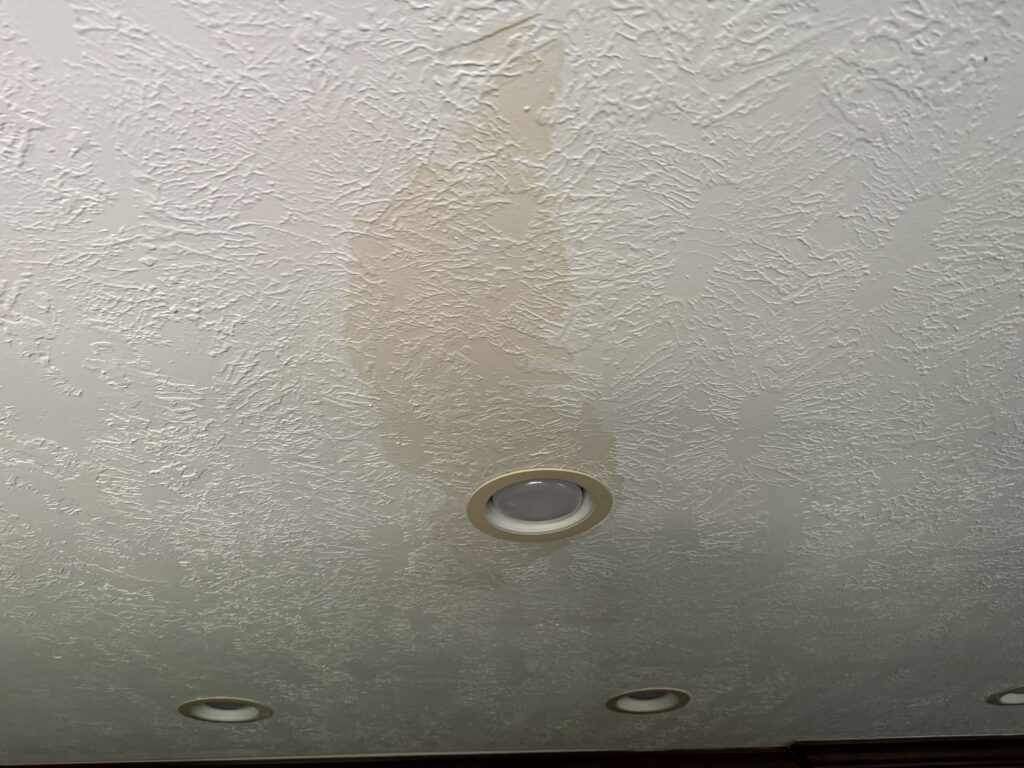
It is nine at night, it has been raining since four, and there is a brown ring spreading across your living room ceiling. What you need right then is not a lecture on roof systems. You need to know what to do in the next sixty minutes — and emergency roof leak repair really does start with you, not with the roofer. What you do before anybody arrives decides whether this stays a drywall job or becomes a framing job.
I have taken this call a lot of times. The homeowners who come out of it best moved fast on three simple things, then stopped, instead of climbing a wet roof in the dark.
So here is the first hour of emergency roof leak repair, in order. Then where the water is actually coming from, what insurance covers, and how to tell a genuine middle-of-the-night emergency from something that can wait for daylight.
The first hour of emergency roof leak repair
Three jobs, in this order: get the water out of the ceiling, get it into a container, get pictures.
Relieve the bulge. If your ceiling is sagging or bubbling, water is pooling above the drywall. Every instinct says leave it alone. Do the opposite. Put a bucket underneath, take a screwdriver or a pencil, and puncture the lowest point of the bulge so it drains in one controlled stream. A half-inch hole is a patch. A collapsed ceiling is a weekend and a contractor.
Contain and move. Buckets under the drip, towels around them to stop splash, then move what matters out of the room. Water spreads along the ceiling and finds a new exit an hour later, so clear more floor than you think you need.
Kill the power if water is near a fixture or outlet. Water tracks along the top of drywall and comes down at can lights and ceiling fans, because those are the holes already cut in your ceiling. If a light is dripping or flickering, shut that circuit off at the panel before you stand under it.
Then photograph everything. Wide shot of the room, close shot of the stain, the bucket, anything ruined. Ten seconds of work worth real money later, and almost nobody does it before cleaning up.
What not to do, even though you want to
This list is shorter, and it saves more people. These are the moves that turn an emergency roof leak repair into a much larger invoice.
Do not get on the roof. Not in the rain, not at night. A wet asphalt roof in the dark is one of the most dangerous surfaces a homeowner can stand on, and the fall does not care that your intentions were good.
Do not caulk the stain from inside. The hole is not where the stain is, which is the whole subject of the next section. Sealing the interior traps water in your decking and insulation and turns a repair into a rot problem.
Do not tear out the wet ceiling yet. Photograph first. If this becomes a claim, the adjuster wants to see the damage, not your cleanup of it.
Do not sign anything a stranger hands you at the door. A leak during a storm brings out people who follow weather radar for a living. Somebody showing up uninvited at 10 p.m. with a contract and an urgent tone is selling, not helping.
Where the water is actually coming from
Most homeowners get this wrong, and it changes the whole problem: the stain on your ceiling is almost never under the hole. Good emergency roof leak repair starts by finding the entry point, not by treating the stain.
Water comes in through a gap, lands on the decking, then runs — down the plywood, sideways along a rafter, down the rafter itself — until it finds a seam, a nail, or a hole somebody already cut. A bathroom fan. A can light. Then it drops. That drop point can be fifteen feet from the entry and is usually downhill of it. The stain tells you where the water quit traveling.
The entry point is rarely the open field of shingles. The field is designed to shed water and mostly does. Leaks come from the places where the roof stops being a simple plane:
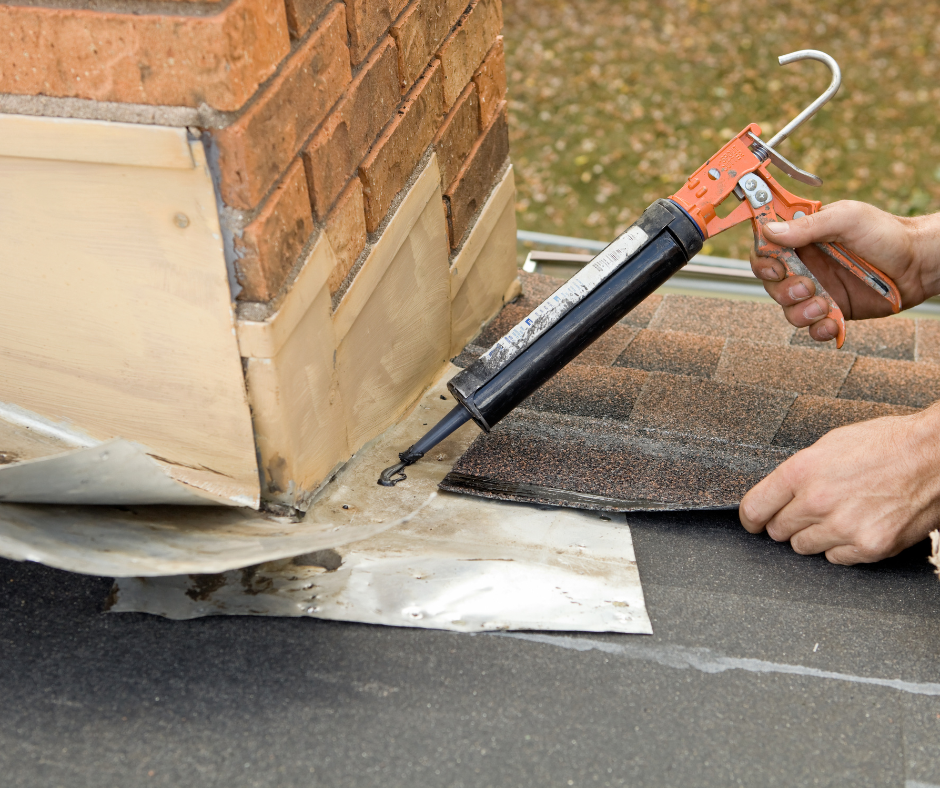
Flashing. Where the roof meets a wall, chimney, or dormer. Metal laid into the shingle courses to carry water back out — and the part most often reused on a lazy reroof instead of replaced. This is our number one call.
Pipe boots. The rubber collars around plumbing vents. The rubber dry-rots and splits in Texas sun, generally somewhere between year eight and year twelve. Small, cheap, extremely common.
Valleys. Where two roof planes meet, water from both concentrates into one channel. High volume, and debris collects there. Valleys leak when under-lapped or when a nail got driven too close to the centerline.
Failed sealant at penetrations. Satellite mounts, solar standoffs, old antenna holes. Anything screwed into your roof is a hole with a warranty on the caulk.
If you can safely get into the attic with a flashlight, look up at the deck rather than down at the ceiling. Dark streaks, damp plywood, or a rusty nail with a wet halo point back toward the entry far better than the stain does. Our guide to the warning signs a roof needs repair covers those attic clues in more detail.
Is this a true emergency, or can it wait until morning?
Not every leak needs emergency roof leak repair at midnight, and a roofer who says otherwise is telling you something about his pricing. Once the water is contained and the ceiling is drained, most leaks are better handled in daylight, when somebody can see the roof surface instead of guessing under a work light.
What moves it into the call-right-now category:
- Water is entering at or near an electrical fixture, panel, or outlet, and killing the circuit has not removed the risk
- The ceiling is sagging across a wide area rather than one localized bulge, which can mean saturated insulation and a structural load
- You can see daylight through the roof deck from inside the attic, or a section of decking feels soft underfoot
- Wind has removed a visible section of shingles and more rain is forecast before morning
- Water is running rather than dripping, and containment is not keeping up
Everything else — a slow drip in a bucket, a stain that is not growing, a leak that only shows up in wind-driven rain from one direction — can wait. Contain it, sleep, let somebody look in the light. Daylight emergency roof leak repair is more accurate and cheaper, and eight hours of a contained drip changes almost nothing.
One exception: if the leak started during a storm that also hit your neighbors, get on a schedule early. After a real hail or wind event in Katy every roofer in the county is booked inside about forty-eight hours, and the people who call on day one get dried in on day one.
What emergency roof leak repair costs, and what insurance covers
An emergency roof leak repair is really two jobs, quoted separately. A dry-in is the temporary fix: a tarp mechanically fastened over the affected slope, or a peel-and-stick membrane patch, meant to hold until the real work happens. The permanent repair replaces the failed flashing, boot, or valley plus any decking gone soft. A split pipe boot is a modest same-day repair. A valley that has been seeping for two years and rotted six feet of decking is a different number, because now there is carpentry in it.
On insurance, the distinction that decides your claim is sudden versus gradual. The Texas Department of Insurance puts it plainly: most homeowner policies cover sudden and accidental water damage, while damage from gradual leaks usually is not covered. A hailstone punching through a boot on Tuesday is sudden. A valley seeping since last spring reads as maintenance, and carriers deny it.
Two more points from that same TDI guidance matter tonight. You have a duty to mitigate — to make temporary repairs protecting the house from further damage — and reasonable temporary work is generally part of the claim, so keep every receipt and photograph the tarp. And TDI notes mold can start growing within a day of a leak. Most policies cover mold on a damaged item but not the cleanup and testing afterward, so the cheapest remediation available to you is fans and a dehumidifier running by tomorrow morning.
Whether to file at all is a separate question. A repair near or under your wind and hail deductible is often better paid out of pocket than turned into a claim that follows you for years; we walked through that math in whether to call insurance or a roofer first. TDI’s disaster claims FAQ and its general homeowners insurance FAQ are straight, non-commercial reads if you go that route.
What happens when we get there
Our first visit on an emergency roof leak repair call is diagnosis and dry-in, not a sales presentation.
We find the entry point, which means getting into the attic as much as onto the roof — the attic side is where the water trail is legible. We dry in whatever is open, and photograph the source from both sides, because that is what an adjuster needs if this becomes a claim. Then you get the honest version, including the part nobody enjoys hearing.
That part: sometimes a leak is a leak, and sometimes it is the first symptom of a roof that is finished. A twenty-two-year-old roof with a leaking valley, brittle shingles, and granules in the gutters does not have a valley problem. Patching buys a season and costs money you will spend again. A nine-year-old roof with a split pipe boot is a one-hour fix, and nobody should talk you into more. Telling those apart is most of the job — we laid out how we make that call in our guide to roof repair versus full replacement in Texas.
After the water stops
Once it is dry and repaired, the useful question is why it happened when it did. Pipe boots fail on a schedule. Flashing fails where somebody cut a corner on the last reroof. Valleys fail where debris sat for three years. Nearly every leak I chase had a date on it that a twenty-minute inspection would have caught, which is the argument for looking twice a year. Emergency roof leak repair is the call you make once; catching the next one early is the habit that keeps you from making it again. Our season-by-season roof maintenance calendar for Katy lays out when to check what.
If you are reading this with a bucket on the floor right now: drain the bulge, move your things, kill the circuit if a light is involved, take the pictures, stay off the roof. Then call us at (281) 769-4282 whenever you are ready — tonight if it is one of the five situations above, in the morning if it is not. We will tell you which one it is on the phone, and nobody here is going to sell you a roof at eleven at night.
About the author
About the author — Brent Burgin is the owner and operator of All Out Roofing, a licensed local roofing contractor serving Katy, Houston, Cypress, Fulshear, and surrounding communities. Brent has lived in the Katy/Fulshear area since age 7 and is also a licensed Texas real estate agent (TREC #630213, with Terra Point Realty since 2013) — a cross-domain background that helps homeowners think through roof decisions in the context of their home’s overall value and any pending real estate transactions. All Out Roofing is a CertainTeed Select ShingleMaster, a credential held by fewer than 1% of roofing contractors, and installs GAF and Owens Corning shingle systems.
All Out Roofing, LLC — 25220 Kingsland Blvd, Ste 100, Katy, TX 77494. Available 24/7 for storm response.