A roof certification comes up at the worst possible moment. You are eleven days into a thirty-day contract, the buyer’s inspector wrote three lines about the roof, and now somebody — the lender, the buyer’s agent, or the buyer’s insurance carrier — wants a piece of paper saying the roof is good.
I sit on both sides of this one. I run a roofing company, and I have held a Texas real estate license since 2013. So I get the call from the seller who needs the document and the call from the agent who is not sure what to ask for. They are usually asking for different things using the same word.
Here is what a roof certification actually is, what it is not, who typically asks for one in this market, and what it should cost you in time and money.
What a roof certification actually says
A roof certification is a signed statement from a roofing contractor that, as of the inspection date, the roof is free of active leaks and, in the contractor’s professional opinion, has a stated remaining service life — typically expressed as two, three or five years.
Read that again, because two phrases are doing all the work.
As of the inspection date. It is a snapshot. A hailstorm the following Tuesday does not make it false; it makes it stale.
In the contractor’s professional opinion. It is a judgment, not a measurement. Two competent roofers can look at the same fifteen-year-old roof and write different numbers, and both can be defensible.
Texas does not license roofing contractors and does not define this document by statute. There is no state form and no standardized language. That means the value of any roof certification is exactly the value of the company whose name is on it, and a certification from an outfit that will not be reachable in two years is worth very little regardless of what it says.
What it is not
Three things get conflated constantly, and the confusion costs people money at the closing table.
It is not a home inspection. A licensed Texas home inspector working under TREC’s standards of practice evaluates the roof as one of many systems, generally from the ground or an accessible edge, and reports observed deficiencies. A roofer doing a certification walks the roof, opens up penetrations, checks flashing terminations and looks at the attic side. Different scope, different depth, different purpose. You can read what a roofer actually checks in our roof inspection checklist.
It is not a warranty. This is the big one. A roof certification states an opinion about remaining life. It does not obligate the issuing contractor to fix anything if the roof leaks in month fourteen. A warranty is a separate written promise with its own terms, and if the document you are handed does not use the word warranty and spell out what is covered, it is not one.
It is not an insurance inspection. Carriers increasingly do their own roof inspections at binding or renewal, and they apply their own underwriting standards. A roofer’s certification is evidence a carrier may or may not accept. It does not bind them, and the Texas Department of Insurance notes that carriers may decline to cover a roof in poor condition on their own assessment.
Who asks for one in a Texas transaction
In the Katy, Fulshear and Cypress market, a roof certification usually gets requested by one of four parties, and knowing which one changes what the document needs to say.
The buyer’s insurance carrier. The most common trigger now. A buyer goes to bind a policy, the carrier sees a roof past a certain age, and asks for documentation of condition before issuing. If the certification is for a carrier, ask the buyer’s agent exactly what the underwriter needs — some want a remaining-life statement, some only want confirmation of no active leak, and some will accept nothing but their own inspector.
The lender. Less common on conventional loans, routine on government-backed ones. FHA, VA and USDA appraisers flag roof condition, and an appraisal that calls out the roof generally requires either repair or documentation before the loan can close.
The buyer, through the inspection amendment. The buyer’s inspector wrote something about the roof, and rather than negotiating a dollar amount the buyer asks for a roofer’s opinion. This is often the cheapest path for a seller — a certification costs far less than the credit the buyer was about to ask for.
The listing agent, before the house goes live. The smartest version. Getting the roof looked at before listing turns a mid-contract emergency into a pre-listing decision you make on your own schedule.
Why a seller should want one before listing
This is the part I care about most, and it is the part my real estate side and my roofing side agree on completely.
Every roof issue discovered during an option period costs more than the same issue discovered before listing. Not because the repair is different — it is the same repair — but because of the leverage. Under contract, the buyer is negotiating against your closing date and your next purchase. Before listing, you are getting three bids on your own timeline.
There is a disclosure dimension too. The Texas seller’s disclosure notice asks what the seller knows, and the TREC form includes roof age, roof repairs and known defects. Getting a roof certification does not create a disclosure obligation you did not have; it gives you a documented, dated, professional answer instead of a guess. Guesses on a disclosure form are how sellers end up in trouble years later.
And it prices the problem honestly. A buyer who sees an unquantified roof concern imagines the worst number. A buyer who sees a dated certification from a real local company, with a stated remaining life, negotiates against a known quantity. We wrote about the broader version of this in our look at repair versus full replacement in Texas, and my real estate side covers the transaction half of it over at Terra Point Realty.
What a real one includes
If you are being handed a certification, these are the things it needs to have. If yours is a single paragraph on a letterhead with a signature, ask for more.
- The date of the inspection, stated clearly, and the company's license or registration details plus how to reach them in two years.
- The scope: which slopes were walked, whether the attic was entered, and anything that could not be accessed and why.
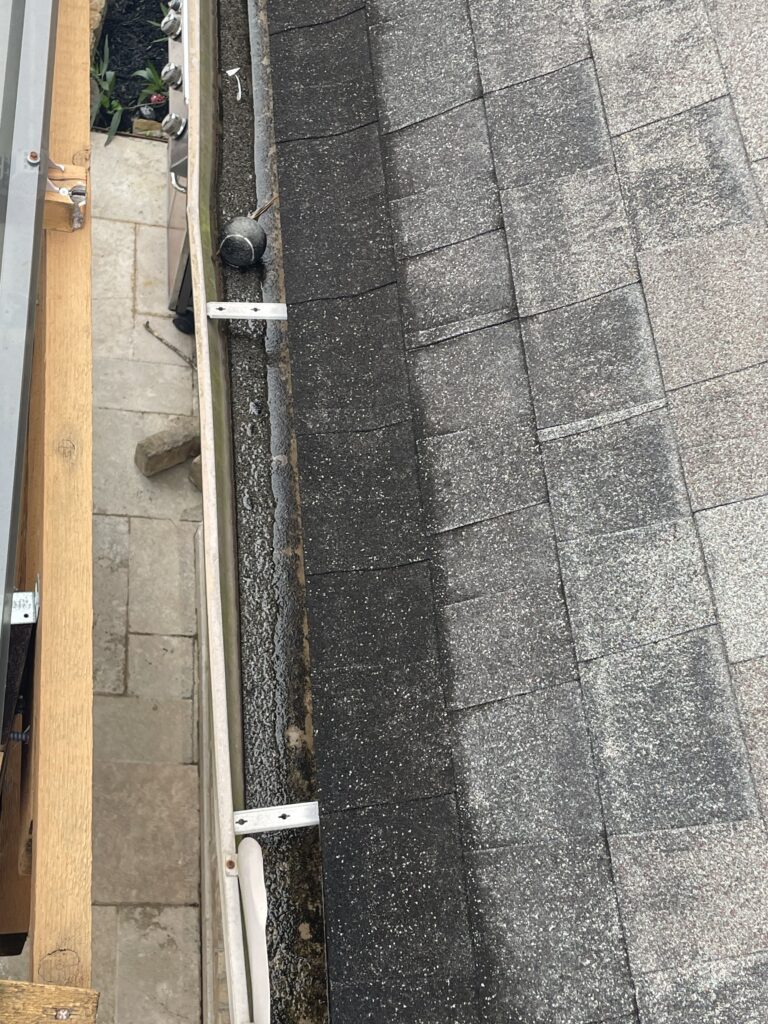
- Condition by component, not just overall: field shingles, ridge, valleys, flashing at walls and chimneys, pipe boots, drip edge, and ventilation.
- A remaining service life estimate with the reasoning behind it, not just a number.
- Any repairs performed as part of the certification, itemized, along with anything found and deliberately not repaired.
- Photographs. A certification without photographs is an assertion. With them, it is evidence.
When a roof certification is the wrong tool
I turn these down sometimes, and it is worth saying why.
When the roof is clearly finished. If the roof is at the end of its life, no honest contractor is going to certify remaining years on it, and asking three companies until one will is a bad plan that follows the transaction. The real options are replace it, credit the buyer, or price the house accordingly. Pretending otherwise just moves the problem to a worse moment.
When what you actually need is a warranty. If the buyer’s real concern is who pays when it leaks next spring, a certification does not answer that. A workmanship warranty on completed repair work does.
When the carrier has already said no. If the buyer’s underwriter has declined the roof on age alone, a certification will not reverse it. Age-based underwriting rules are not condition arguments.
When there is an open insurance claim. Certifying a roof mid-claim can complicate the claim. Sort out the claim first.
What it costs and how long it takes
A straightforward single-story asphalt roof in this area is generally a same-week appointment and a document within a day or two of the visit. Pricing varies with pitch, access, roof size and whether repairs are needed to make the roof certifiable, and plenty of contractors including us will roll the inspection into the repair work rather than charging for both.
What should make you suspicious is a certification offered instantly, sight unseen, or one bundled into a sales pitch for work you did not ask about. The document is only worth something because somebody with a reputation actually looked. If you want a broader sense of how to tell a serious contractor from a storm chaser, we laid that out in how to choose a roofer in Katy.
If you are listing a house in Katy, Fulshear, Cypress or Richmond and want the roof question answered before a buyer asks it — or you are under contract and need the document this week — call us at (281) 769-4282. If the honest answer is that the roof cannot be certified, we will tell you that too, and we will tell you before your agent has to explain it to a buyer.
About the author
About the author — Brent Burgin is the owner and operator of All Out Roofing, a licensed local roofing contractor serving Katy, Houston, Cypress, Fulshear, and surrounding communities. Brent has lived in the Katy/Fulshear area since age 7 and is also a licensed Texas real estate agent (TREC #630213, with Terra Point Realty since 2013) — a cross-domain background that helps homeowners think through roof decisions in the context of their home’s overall value and any pending real estate transactions. All Out Roofing installs CertainTeed, GAF and Owens Corning shingle systems.
All Out Roofing, LLC — 25220 Kingsland Blvd, Ste 100, Katy, TX 77494. Available 24/7 for storm response.